Nikki and I stood at the edge of the vast salt flat, watching as the morning light transformed the stark white plain into a shimmering mirror. Our truck was parked about 100 yards back, our home on wheels looking particularly small against the enormity of Chile’s northern altiplano landscape. After two incredible weeks exploring the Mars-like landscapes of San Pedro de Atacama and the otherworldly expanses of Bolivia’s Salar de Uyuni, we were eager to venture further into the remote wilderness of northern Chile. The extreme altitudes and untamed beauty of Vicuñas and Lauca National Parks were calling to us, promising experiences far from the tourist trail.
The decision to venture into this remote part of Chile wasn’t made lightly. The northern altiplano sits entirely above 14,000 feet and gas is hard to come by. But after seeing the incredible salt flats of Uyuni, we were hungry for more of these unique high-altitude ecosystems. Our overlanding journey through South America was about seeking these less-traveled paths, about finding beauty in places where few venture.
Our journey to the altiplano began on what the map optimistically called a “road” but was more accurately a faint suggestion of tire tracks meandering through donkey filled landscape. We had spent hours studying the route on iOverlander and Maps.Me to find this road that would connect Lauca and Vicuñas national park. With 40 liters of extra gas and full on other supplies 3, we left the last significant town behind knowing that we would be on our own for the next few days.
The drive was every bit as challenging as we had anticipated. The tracks wound their way higher and higher into the mountains, sometimes disappearing completely and leaving us to navigate by sight and instinct. It was both thrilling and a little intimidating about being so far from civilization, where a wrong turn or mechanical failure could mean serious trouble. We did come across a another car that was stuck in a sandy river bottom. They had been there for 7 hours and thankfully for them, we were able to tow them out of the sand and send them back on their way they came. We thanked Tony the Tacoma for his off-roading capability as we cruised across the river valley to our campsite on the other side.
On our second day of off-roading, we encountered a stream crossing that looked innocuous enough from a distance but revealed its true nature as we approached. The banks were steep, and the bottom was littered with rocks that threatened to catch our undercarriage.
“I think we can make it,” I said with more confidence than I felt. “Just need the right angle.” I did think the crossing was doable but I may have been influenced by not wanting to turn back and redo the 10 hours of off-roading we had just completed when we were only 5 km from the paved main road.
I carefully lined up the truck and started the descent toward the stream. We were about halfway through the crossing when we heard it—that sickening crunch of metal meeting rock. Our back bumper had caught on a boulder as we climbed out of the stream bed, and the sound of tearing plastic told us this wasn’t going to be a quick fix.
After carefully extracting ourselves from the situation, we assessed the damage. Our back bumper was partially torn away, hanging at an awkward angle and scraping the ground but we made it through the crossing. With some duct tape and a bit of ingenuity, we managed to secure it well enough to continue, but it was a stark reminder of how isolated we were. This wasn’t like breaking down near Temuco where we could find a shop with a line out the door; out here, we were truly on our own.
Despite the bumper mishap, our spirits remained high as we finally entered Vicuñas National Park. The landscape opened up before us into a vast plateau dotted with lakes and marshes—perfect habitats for the flamingos we had been hoping to see. And there they were, dozens of them, their pink bodies creating a stunning contrast against the blue of the high-altitude lakes.
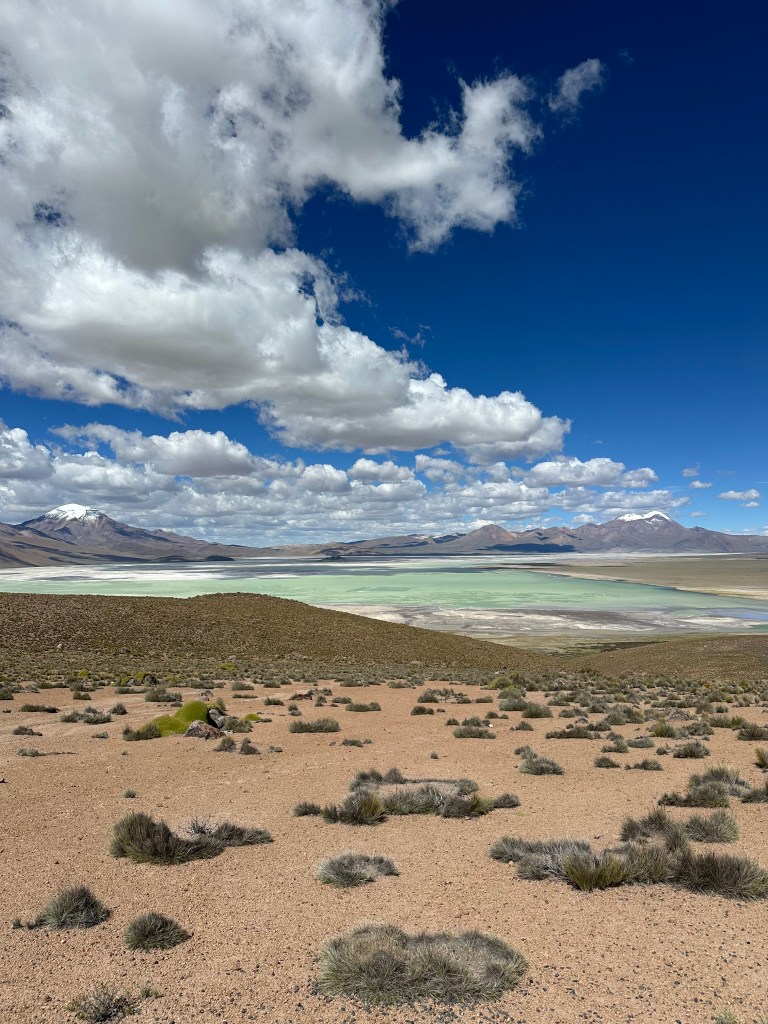
“I still can’t believe we’re seeing flamingos at 14,000 feet,” Nikki marveled as we watched them filter feed in the mineral-rich waters. “It feels like we’re on another planet.” We traversed around the expansive salt flat to arrive at a remote hot spring, which are one of our favorite things on this trip!
The hot spring was the perfect antidote to the chilly altiplano air, and we quickly changed into swimsuits and slipped into the warm, mineral-rich water. As we soaked, taking in the panoramic views, Nikki suddenly grabbed my arm and pointed. Just about fifty yards away, a group of flamingos had landed at the edge of a neighboring pool, apparently undisturbed by our presence. We watched in amazed silence as they went about their business, occasionally dipping their beaks into the water or preening their feathers.
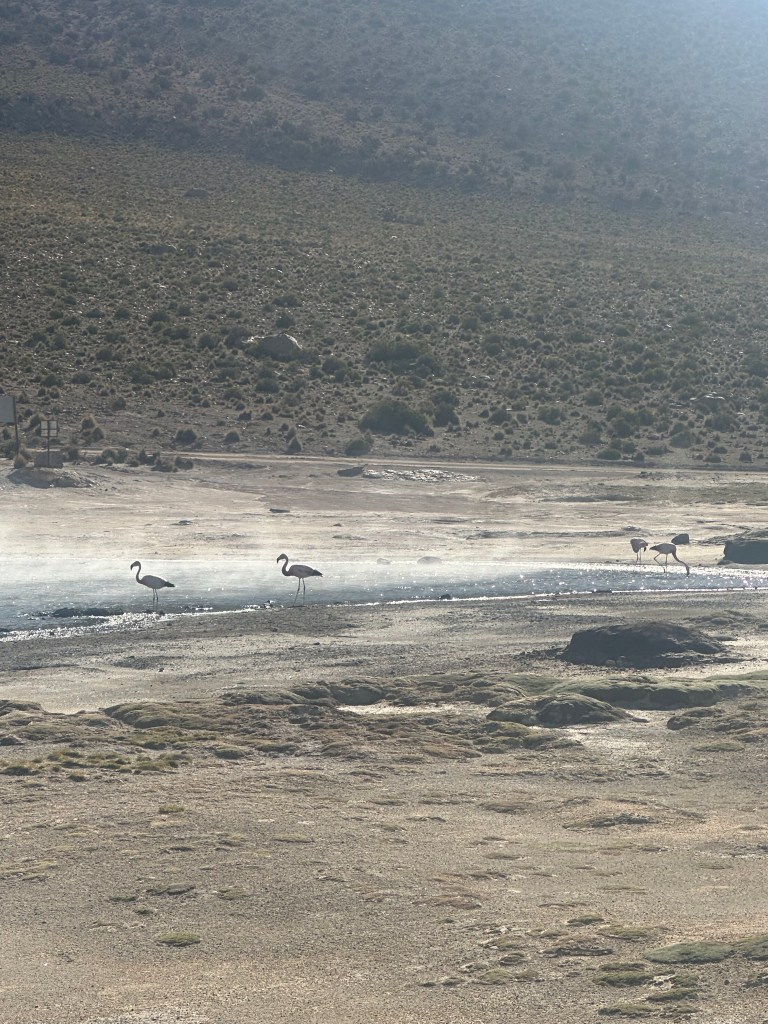
“This has to be one of the most surreal experiences of my life,” Nikki whispered, not wanting to disturb our pink neighbors. “Soaking in a hot spring at 14,000 feet while watching flamingos.”
We stayed in the hot spring until our fingers pruned, sharing the space with our flamingo friends who seemed completely unconcerned with our presence. It was one of those rare moments of perfect communion with nature that make all the hardships of overlanding—the broken bumpers, the challenging routes, the uncertainty—completely worth it.
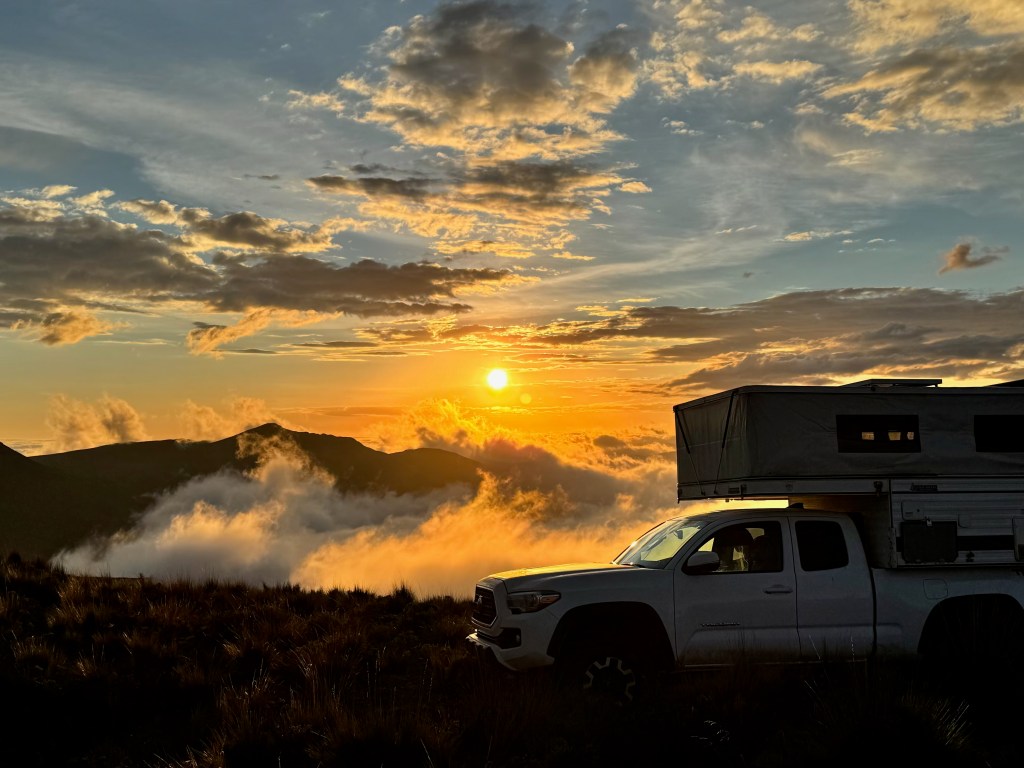
We found a perfect camping spot after the hot spring with a view of both the flamingo-filled lake and a nearby volcano. That night, we slept under one of the clearest night skies I have ever seen, with the Milky Way stretching from horizon to horizon in breathtaking detail. The silence was profound—no distant traffic, no airplanes overhead, just the occasional call of a bird and the whisper of wind across the altiplano.
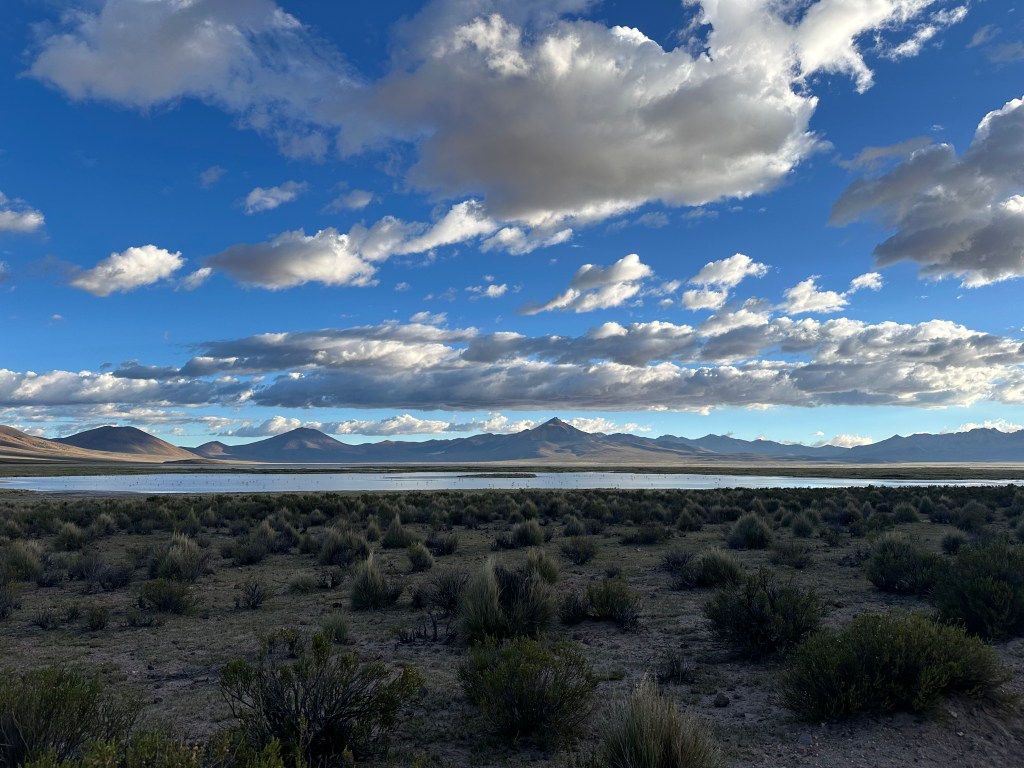
The next morning, we continued our journey to Lauca National Park, driving through landscapes that seemed to belong in a nature documentary rather than real life. The twin peaks of Volcán Parinacota and Volcán Pomerape dominated the horizon, their perfect cones reflecting in the mirror-like surface of Lake Chungará. We stopped to take in the view, both of us speechless at the beauty before us.
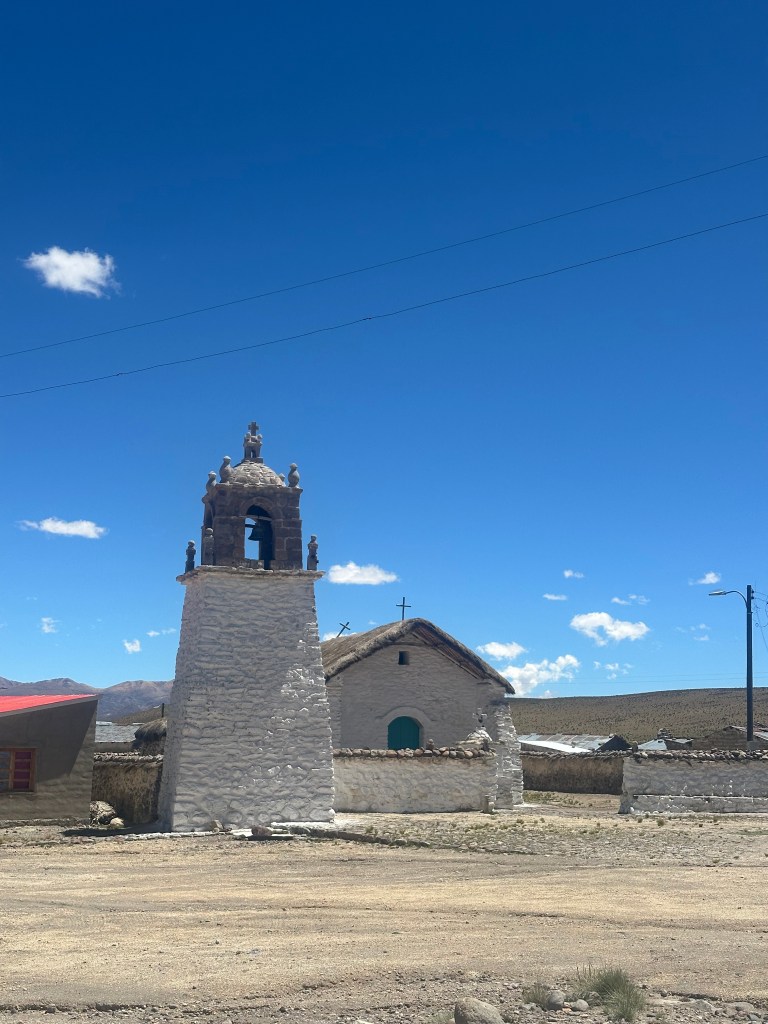
We decided to stop at the ranger station to get information about hiking trails and camping spots. The ranger, Carlos, seemed genuinely surprised to see visitors in this remote section of the park.
“Not many people come this way,” he told us in Spanish, his eyes crinkling with a smile. “Most tourists stay on the main road. You are adventurous!”
We chatted with Carlos for almost an hour, learning about the unique ecosystem of the park and the efforts to protect the vicuñas and other wildlife from poaching. He pointed us toward a few unmarked viewpoints that weren’t on any maps and gave us tips on the best spots to observe wildlife.
We spent three more days exploring Lauca National Park, hiking to viewpoints that offered expansive vistas of the altiplano, observing more vicuñas and even catching sight of the elusive Andean fox. Each night, we camped in solitude, not seeing another human for our entire stay except for Carlos at the ranger station.
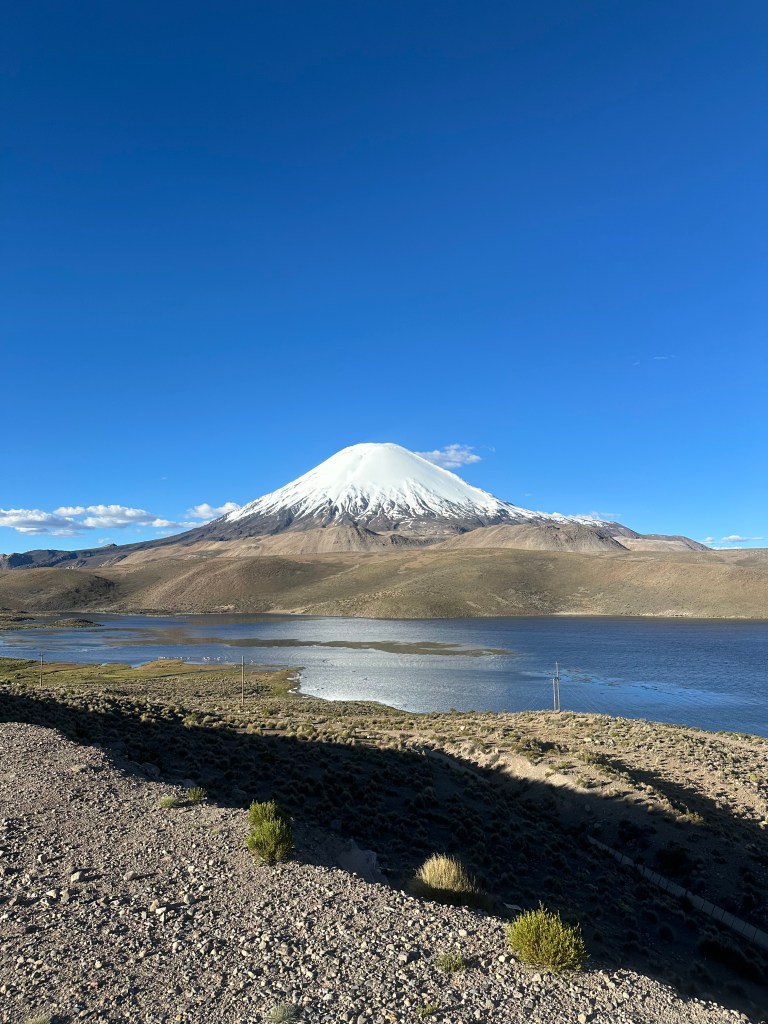
On our last morning in Lauca, we woke early to watch the sunrise over Volcán Parinacota. As the first light hit the snow-capped peak, turning it a soft pink, we reflected on our journey through this remote corner of Chile. The broken back bumper (now held together with even more duct tape and a growing collection of stickers to hide the damage) was a small price to pay for the experiences we had gathered.
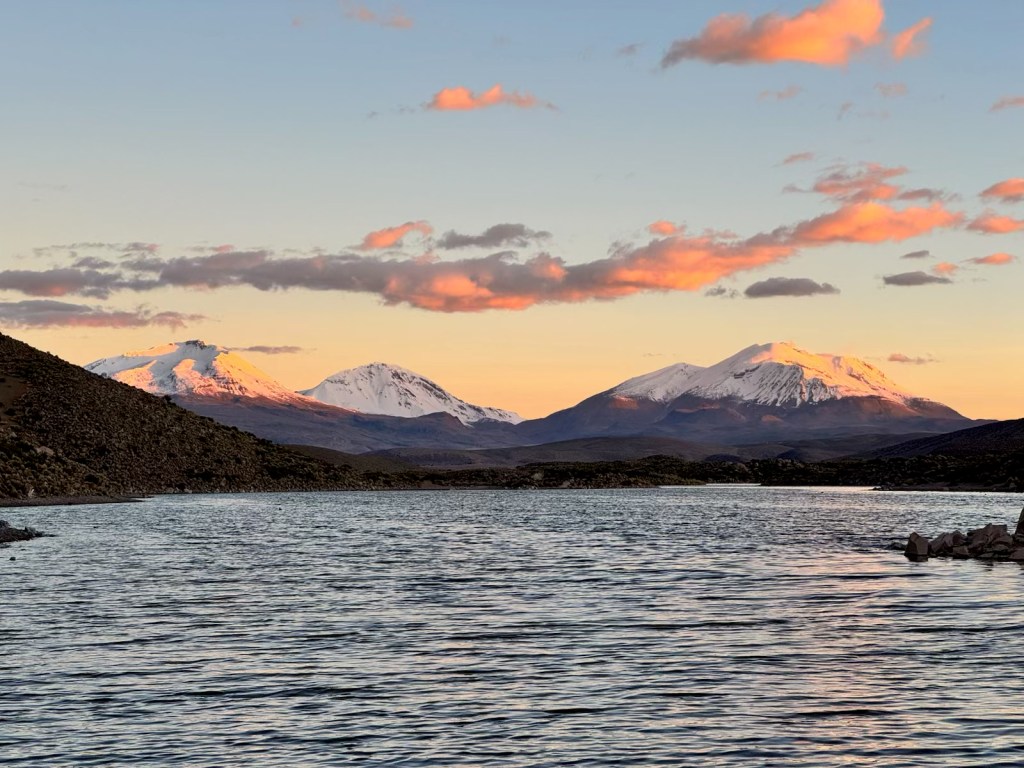
As we prepared to leave the altiplano and head back to more populated areas, I thought about how this journey had epitomized what overlanding is all about for us—seeking out those places that test your vehicle and your spirit, but reward you with experiences few others will ever have. After the salt flats of Uyuni and the red deserts of San Pedro de Atacama, the remote beauty of Vicuñas and Lauca National Parks had offered us yet another face of the incredible Andean highlands.
With one last look at the magnificent landscape and our last destination in Chile, we climbed into our truck and began the long descent back to civilization, already planning our next adventure, crossing into Peru!
 Nikki and Colter's South American Travel Blog