After our altiplano adventures in northern Chile’s remote national parks, Nikki and I were ready to move northward and cross into Peru, a country we’d both been looking forward to since planning our overlanding journey. The border crossing from Chile to Peru was next on our list, along with exploring the culturally rich city of Arequipa, the dramatic depths of Colca Canyon, and the steaming geysers that dot the volcanic landscape.
The border crossing was relatively straightforward but not quick. We arrived early in the morning hoping to beat any crowds, but found ourselves in a line of vehicles already waiting for processing. The Chilean exit procedures went smoothly, and then we drove the short distance to the Peruvian entry point.
“Stamp number four in the passport for this trip,” Nikki said as we finally pulled away from the border. The entire process had taken about three hours, which honestly wasn’t bad compared to some stories we’d heard from other overlanders. The road ahead beckoned, and Arequipa was our first destination in this new country.
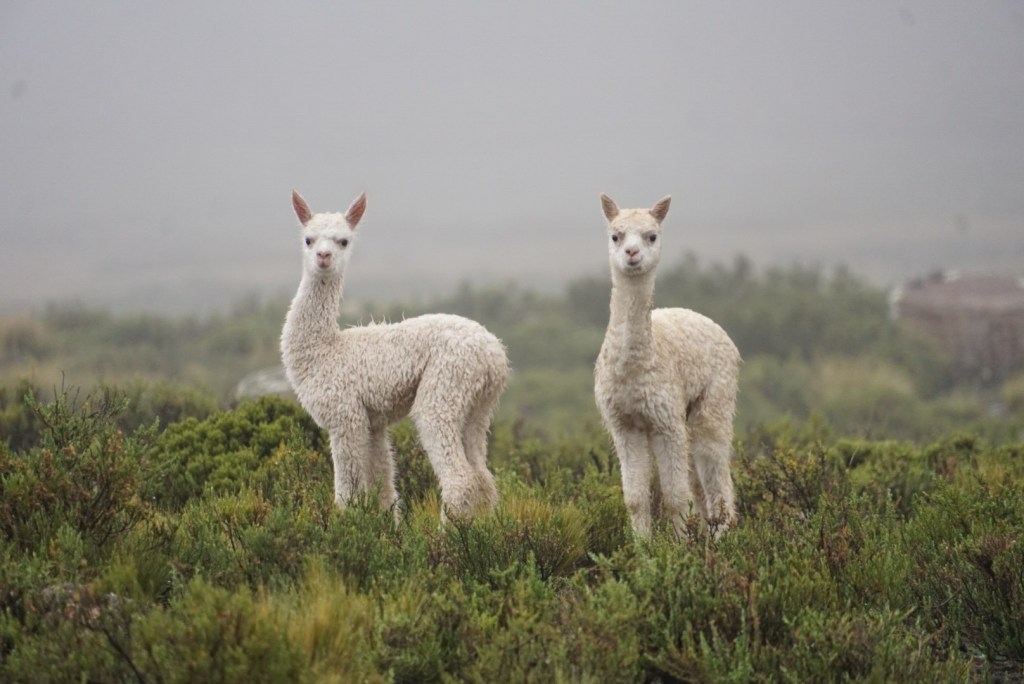
The drive to Arequipa was beautiful, starting in a desolate desert at the border crossing to winding through highlands with distant volcanoes framing the horizon. As we approached the city, the magnificent El Misti volcano dominated the skyline, its perfect cone standing sentinel over what we would discover was one of Peru’s most charming cities.
After weeks of camping and basic accommodations in remote parts of Chile, we decided that Arequipa warranted a bit of a splurge. We found a charming boutique hotel in the historic center, complete with a courtyard and stone archways that spoke to the city’s colonial past.
“I think we’ve earned this,” I said as we dropped our bags in a room with an actual mattress instead of our truck’s sleeping platform. Nikki was already eyeing the shower, which promised hot water but to our dismay only spewed cold water. A nice hot shower is one of the hardest niceties to find on a trip like this. Unfortunately we are used to cold showers and took one anyways.
Refreshed and ready to explore, we spent our first day wandering the historic center of Arequipa, admiring the distinctive white volcanic sillar stone buildings that give the city its nickname, “The White City.” The Plaza de Armas was particularly stunning, with its cathedral and colonial architecture providing the perfect backdrop for people-watching.
The highlight of our time in Arequipa was undoubtedly the Santa Catalina Monastery. This sprawling 20,000 square meter citadel in the heart of the city served as a cloister for Dominican nuns for over 400 years. Walking through its vibrant streets and cloisters painted in deep blues and terracotta reds felt like stepping back in time.
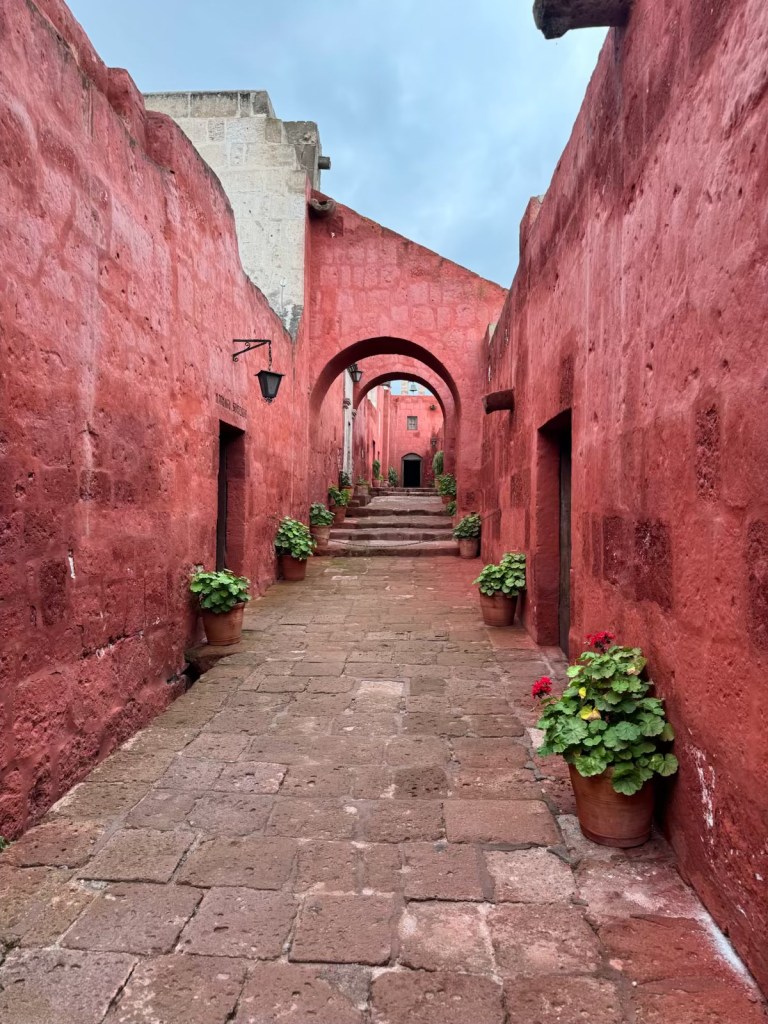
“It’s like a small city within the city,” Nikki remarked as we wandered through the maze of tiny streets, each named after Spanish cities. The nuns who lived here were primarily from wealthy Spanish families, and many brought servants and luxurious possessions with them when they entered the convent. Our guide explained how each nun had her own quarters, some quite elaborate, which contrasted sharply with our modern image of simplistic monastic life.
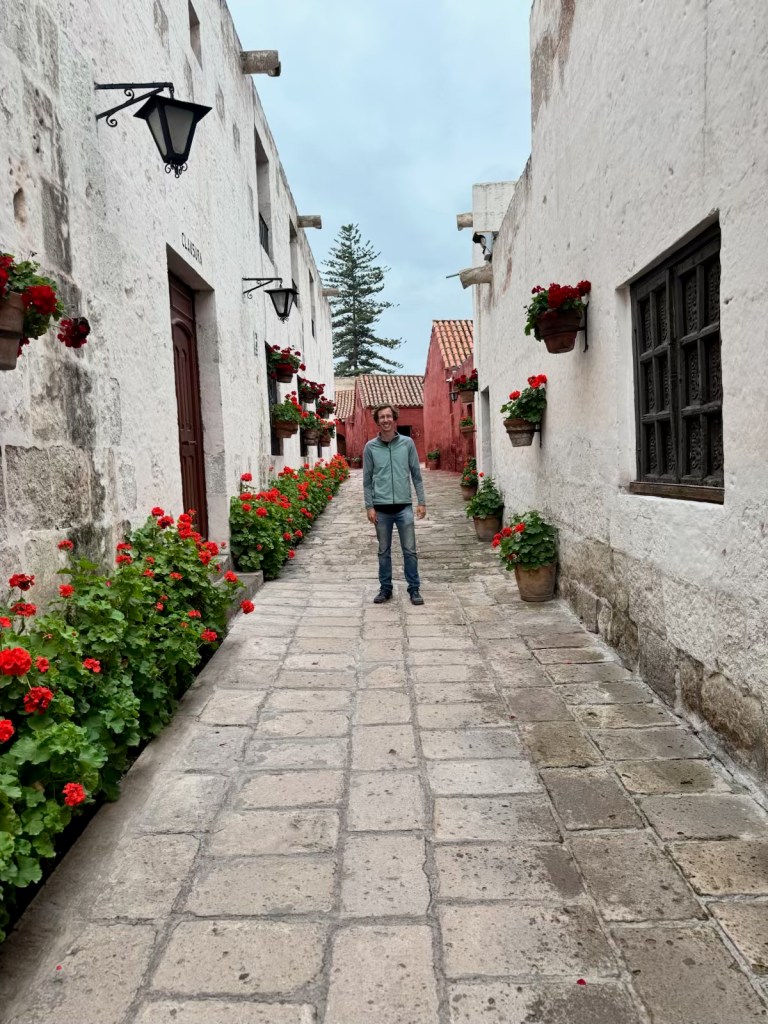
The monastery provided fascinating glimpses into the daily lives of these women – from the communal kitchens with their massive clay ovens to the washing stones where laundry was done, to the silent cloisters where they would meditate. We spent hours exploring, captivated by this hidden world and trying to image what life was like back then.
After all that history and culture, we were ready for something a bit more familiar – good craft beer. A quick search led us to Nowhere Brewery, which immediately felt like a little slice of home. The industrial-chic taproom could have been plucked straight from Pittsburgh or Denver, and the beer list featured hoppy IPAs and rich stouts that reminded us of our favorite breweries back home.
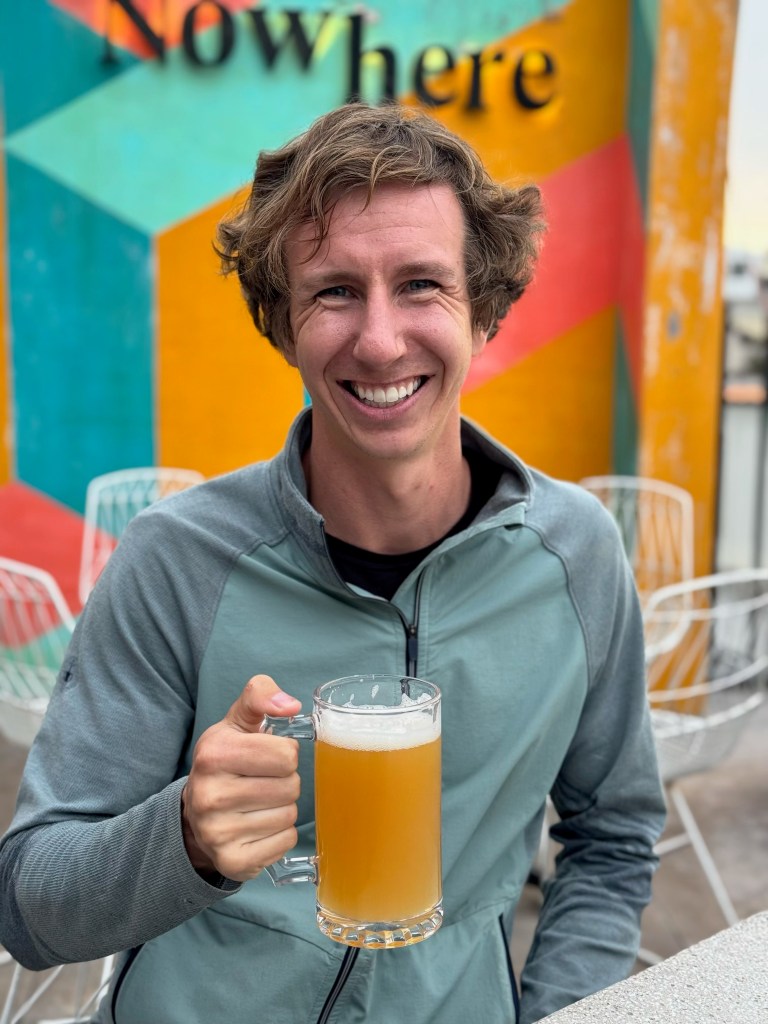
“This tastes just like that double IPA from Dancing Gnome,” Nikki said after her first sip, referring to one of our favorite Pittsburgh breweries. I agreed, already eying the bourbon barrel-aged stout that was next on our tasting flight. We ended up spending the evening chatting with the owners, who wanted to know where we were from and what the beer was like there. We told him his beer stood up to some of favorites in the United States. The beer culture in South America is very different than in the States. Usually each country has 2 to 3 standard pilsners or lagers, which usually are pretty good, but thats where the variety ends. Since our last trip in 2020, we have noticed a small change though. We have found a few places like Nowhere Brewery that are bringing new beer varieties to South America.
After three lovely days in Arequipa, we were ready to get back on the road and explore the natural wonders of the region. First stop: Colca Canyon, one of the world’s deepest canyons at twice the depth of the Grand Canyon.
The drive to Colca took us through high mountain passes where vicuñas grazed against a backdrop of volcanoes. We stopped at the highest point, Patapampa Pass at 4,910 meters (16,109 feet), where even with our experience with high elevation, even walking a few hundred feet took our breath away. The view of the surrounding volcanic peaks more than made up for the lightheadedness.
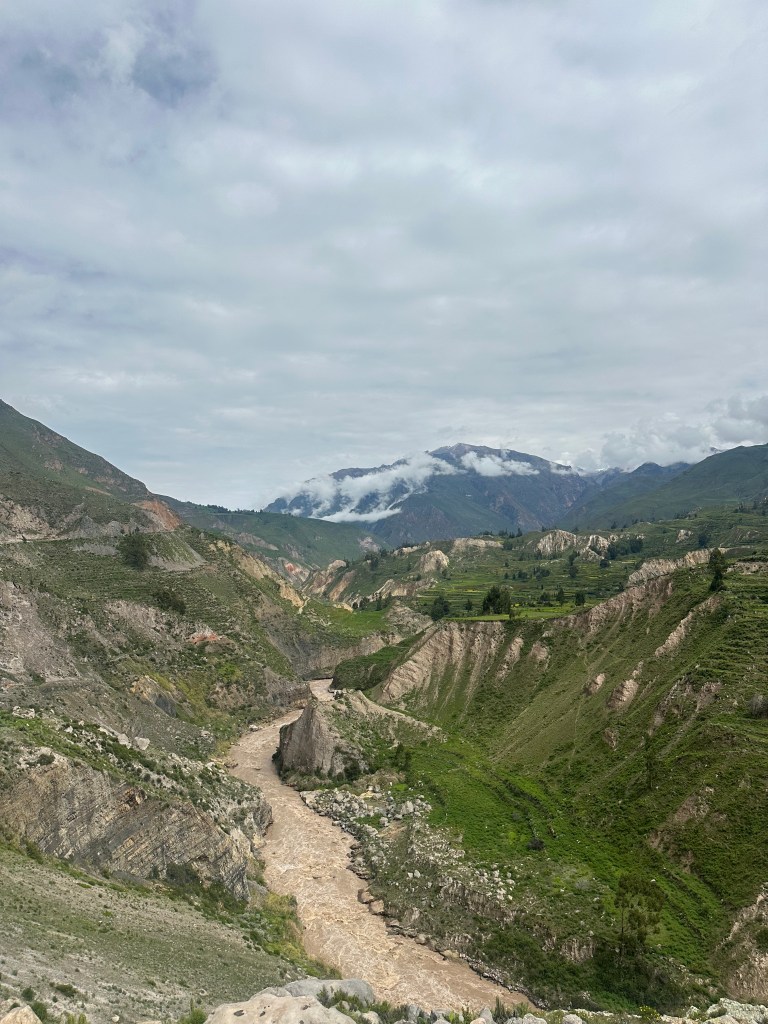
We arrived at the canyon rim in the afternoon and made our way to the famous Cruz del Condor viewpoint, hoping to catch a glimpse of the massive Andean condors that ride the thermal updrafts from the canyon depths each day. We weren’t disappointed – within minutes of arriving, we spotted our first condor soaring below us before rising on an air current to eye level. By sunset, we’d seen at least a dozen of these impressive birds, some flying close enough that we could hear the wind through their massive wing feathers. We can tell we are maturing, or just plain getting older, due to our new interest in birds.
“I can’t believe how huge they are,” Nikki whispered as one particularly large condor glided past, its wingspan easily reaching over 10 feet.
The next morning, we embarked on what would be one of the most physically challenging, short hikes of our trip – a two-day trek to the bottom of Colca Canyon. With our daypacks filled with essentials (and our truck securely parked in a guarded lot), we began the steep descent into the canyon. The trail wound back and forth down the canyon wall, offering increasingly spectacular views of the river cutting through the landscape far below.
After about 3 hours of downhill hiking (which is harder on the knees than you might expect), we reached our destination – an oasis of palm trees and greenery nestled at the bottom of the canyon. The small settlement of Sangalle offered basic accommodations, but the real draw was the naturally fed swimming pool, its clear blue water a welcome sight after the dusty trail.
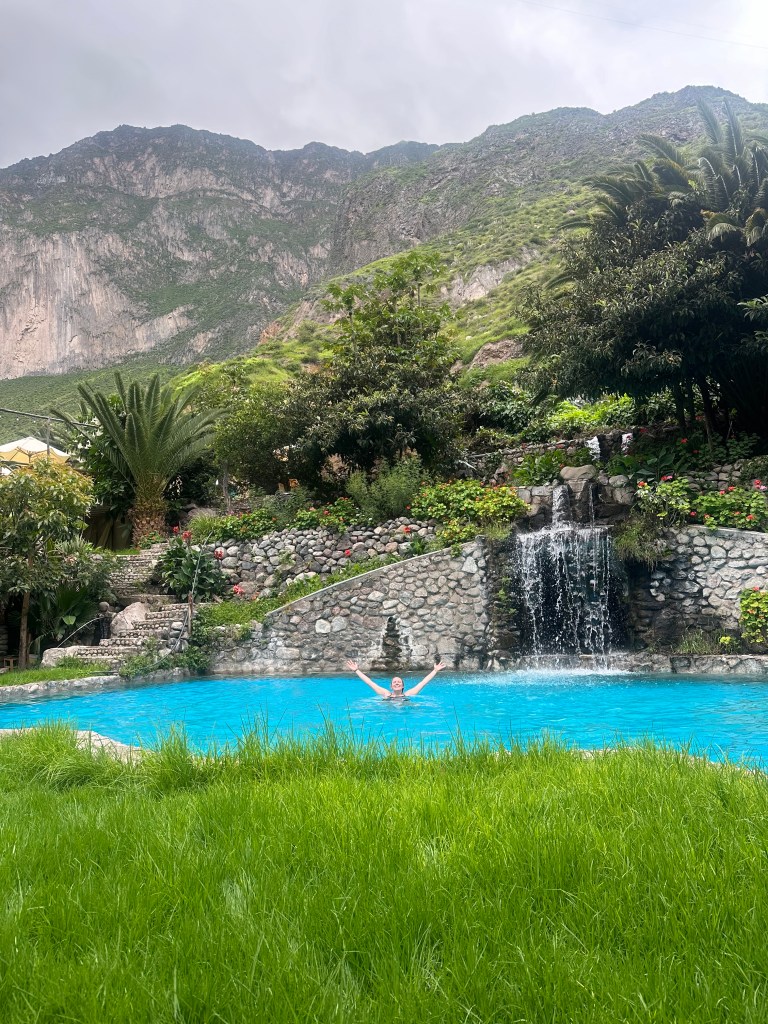
We spent the remainder of that day lounging by and swimming in the pool, marveling at how this lush paradise could exist surrounded by such arid canyon walls. The contrast between the barren rocky slopes and the verdant oasis created by the river’s presence was striking.
We floated in the cool water for hours, looking up at the sliver of sky visible between the towering canyon walls. But we knew the climb out awaited us, and it would be a challenging one.
The hike back up to the canyon rim the next day was every bit as difficult as we’d anticipated. Starting before dawn to avoid the worst of the heat, we slowly made our way up the switchbacking trail, gaining over 1,000 meters of elevation in just a few hours. The views provided welcome excuses to stop and catch our breath, and by mid-morning, we had reached the top, tired but triumphant.
After recovering from our canyon adventure, we continued our journey toward the Valley of the Geysers, another natural wonder that had long been on our list. The drive took us through remote highlands where llamas outnumbered people, and finally to a valley where steam rose from the earth in dozens of places – a clear sign we’d arrived.
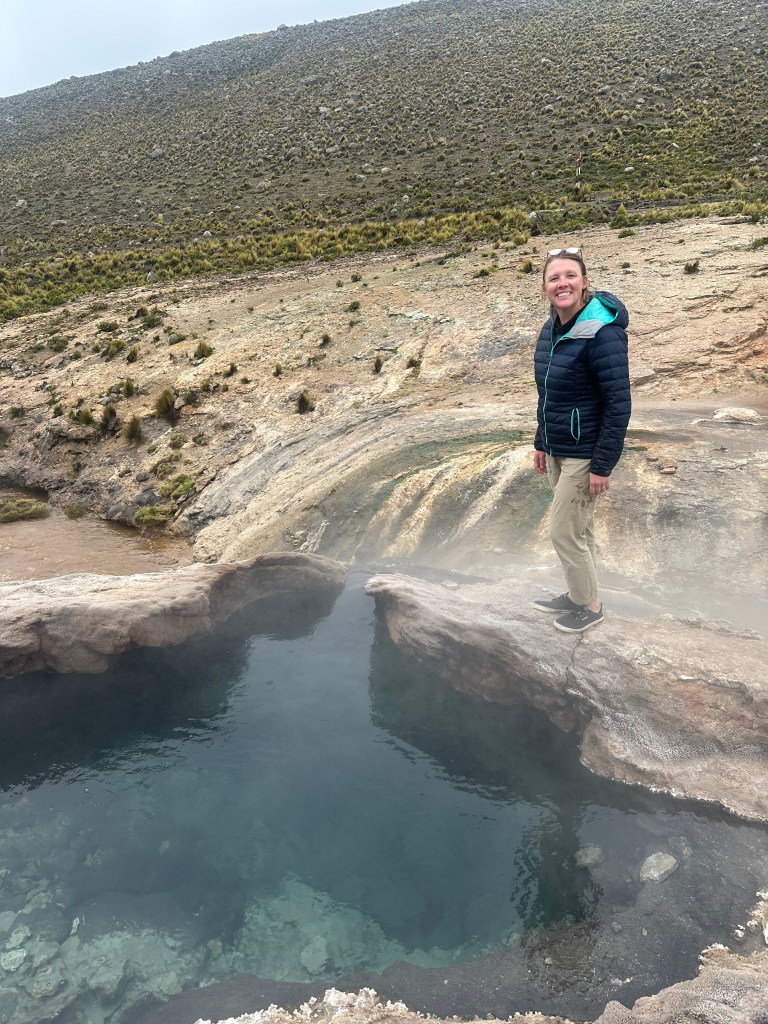
The Valley of the Geysers was unlike anything we’d seen before – over 80 active geothermal features spread across a lunar-like landscape. We spent hours walking among steaming fumaroles, bubbling mud pots, and geysers that erupted with impressive regularity. The smell of sulfur hung in the air, and the ground felt warm beneath our feet. The highlight was the Olla del Diablo (Hole of the Devil), which was a crystal clear 10 foot deep pool of boiling water. We both stood on the rim of the pool and lost ourselves in the mesmerizing rolling bubbles of perfectly clear water. We both felt a slight pull of the “devil” tempting us to jump in.
Another memorable part came as evening approached, and we made our way to the natural hot springs at the edge of the geyser field. Unlike the developed hot springs we’d visited elsewhere, these were simple rock-lined pools where you could divert water from a nearby hotpot to fill the pool with water to your liking all with views of the steaming valley. We soaked our tired muscles as the sun set, turning the sky pink and orange above the volcanic landscape.
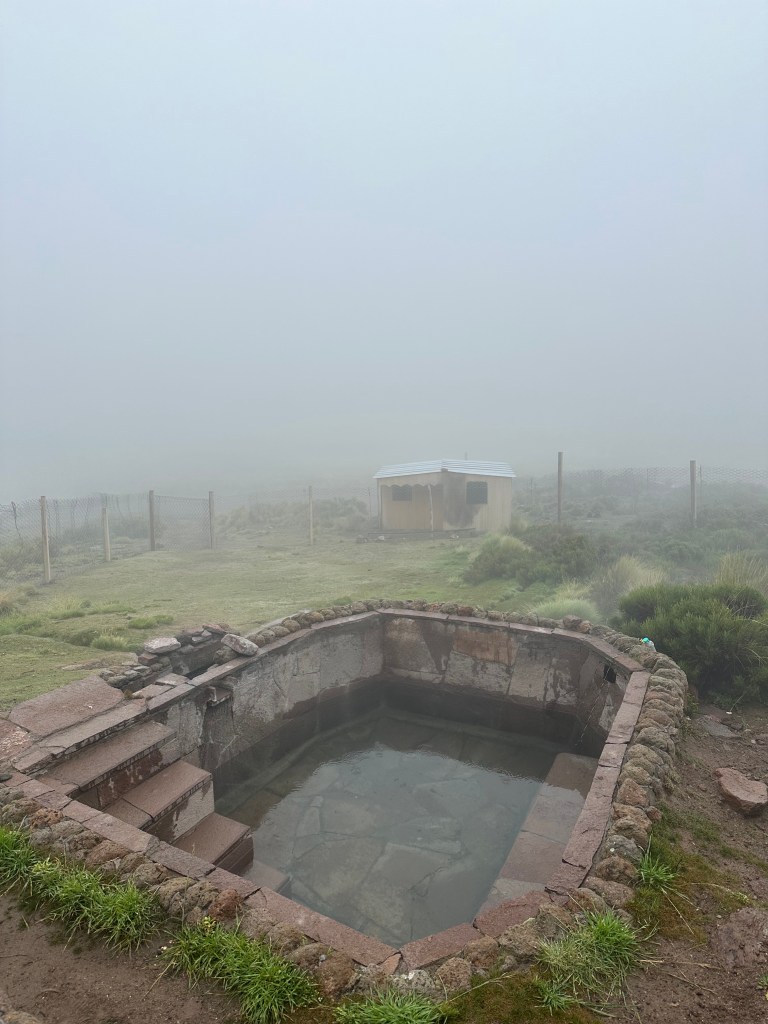
That night, camping near the springs, we experienced one of our most memorable nights. A low fog crept into the valley giving us the feeling of being one of the last people on Earth. The occasional distant apocalyptic like rumble and hiss of geysers provided a reminder of the living earth beneath us.
Our next destination was Puerto Maldonado, a gateway to the Amazon basin that would mark a significant change from the highland landscapes we’d been traveling through. The drive was long but fascinating, as we descended from the heights of the Andes into the beginnings of the Amazon.
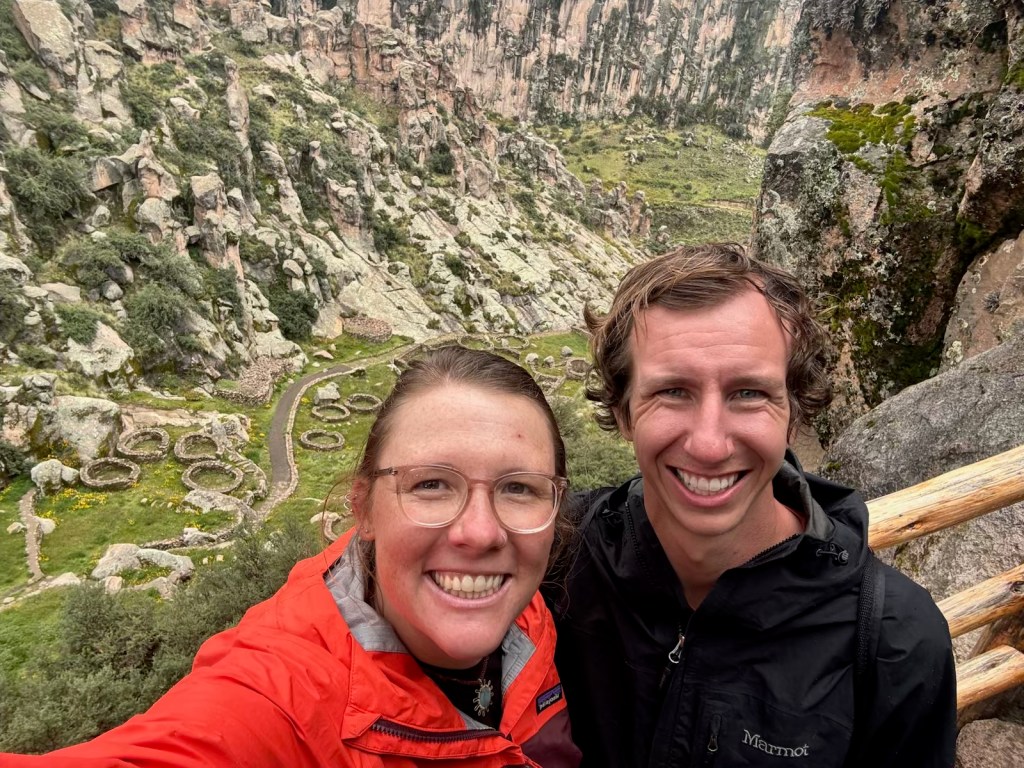
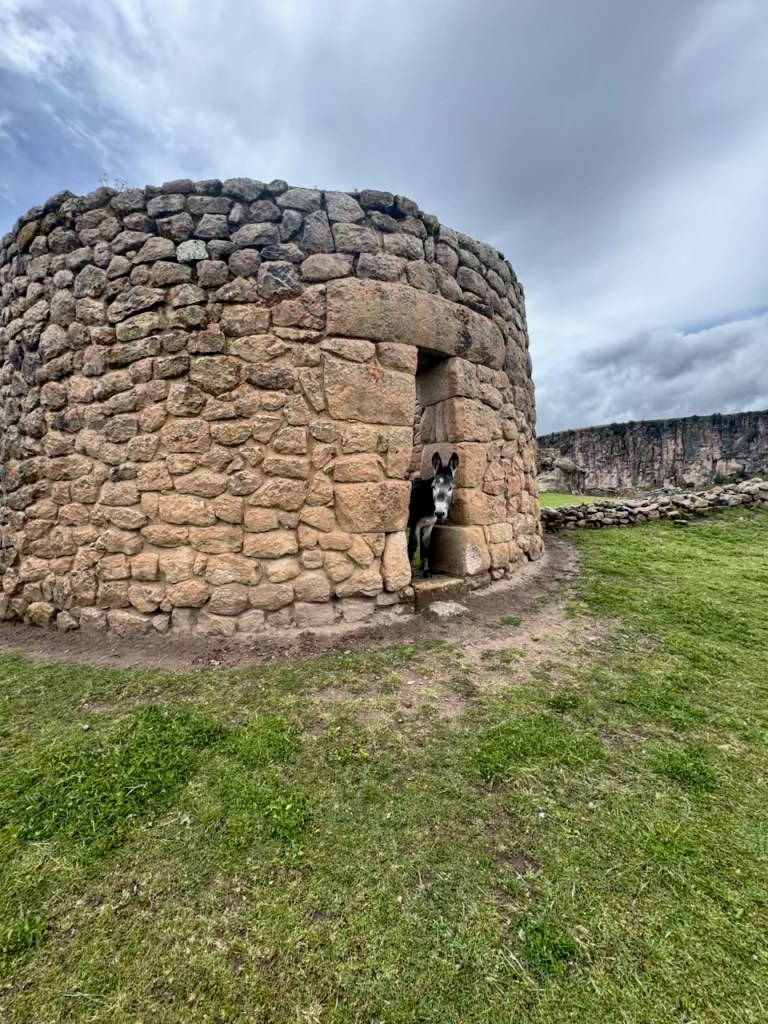
Along the way, we made a detour to visit a lesser-known archaeological site perched on a ridge overlooking what’s known as Tres Cañones – three dramatic canyons carved by rivers converging in a spectacular landscape. The pre-Incan ruins were not as restored or famous as others in Peru, but their dramatic setting made them special.
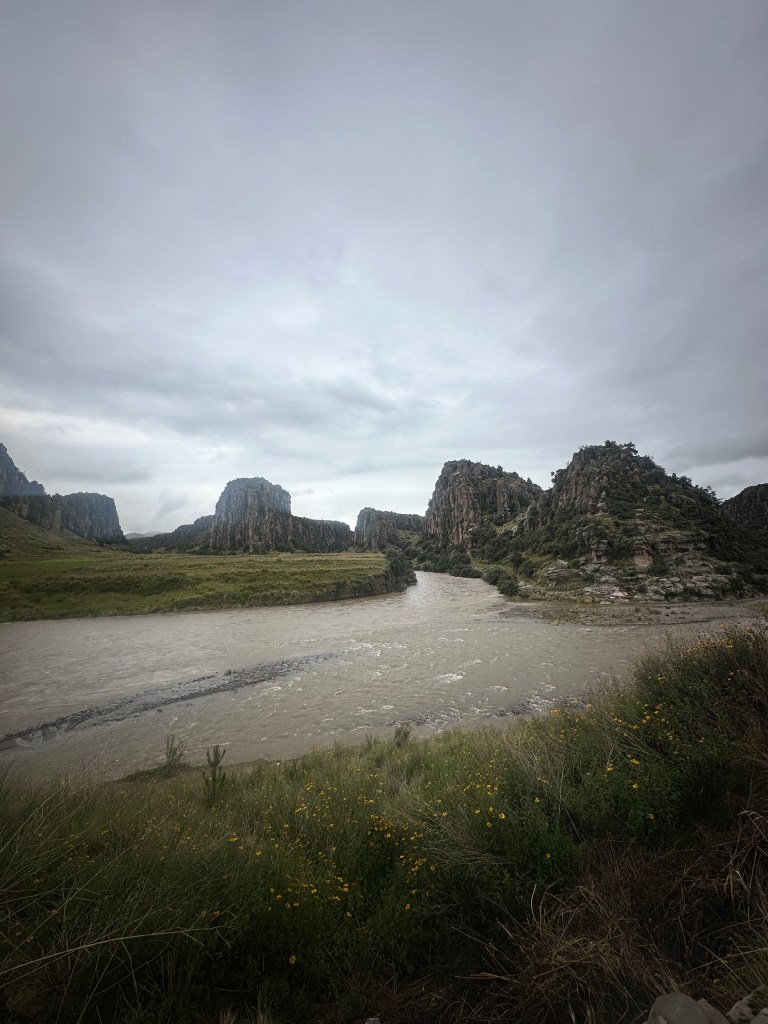
“Can you imagine living here and waking up to this view every day?” Nikki asked as we stood on ancient stones looking out over the vast canyons. We spent several hours exploring the ruins and hiking along the canyon rim, marveling at how the ancient builders had chosen such a spectacular and strategic location. This pre-Incan site had just been restored and opened to the public in 2024 so we felt very privileged to be some of the first people to tour it.
As we continued our descent toward Puerto Maldonado, the landscape transformed dramatically – alpine scrub gave way to cloud forest, which gradually became lusher and more tropical as we lost elevation. The temperature rose, and the biodiversity increased noticeably with each passing hour.
By the time we reached Puerto Maldonado, we had descended from the cold, thin air of the altiplano to the humid warmth of the Amazon basin. Our truck, which had performed admirably on high mountain passes and remote desert tracks, now found itself on muddy jungle roads – a new challenge for the next leg of our journey.
Looking back on this segment of our overlanding adventure – from the White City of Arequipa to the depths of Colca Canyon, from steaming geysers to ancient ruins – we were struck by the incredible diversity of landscapes and experiences Peru had already offered us. And with the Amazon jungle now before us, we knew the adventures were only beginning.
Our truck’s back bumper, still held together with duct tape and stickers from our altiplano mishap in Chile, had become something of a conversation starter at border crossings and gas stations. “We’ll get it fixed properly back in the States,” we kept saying. But truth be told, it had become a badge of honor – tangible evidence of the roads less traveled that had brought us to this point in our journey.
 Nikki and Colter's South American Travel Blog