After recovering from our unfortunate bout of food poisoning in San Pedro de Atacama, Nikki and I faced a difficult decision. We wanted to explore the famous salt flats and high-altitude lagoons of Bolivia, but we had heard about gas shortages in Bolivia which would make the remote driving more stressful. Even though the idea of driving Take on the salt pans was tempting, we also had to think of the potential long term damage from all the salt corrosion. In the end we decided to leave our beloved Taka securely parked in San Pedro and join a 4-day tour into Bolivia.
Finding secure parking for Taka was our first priority. Thankfully, iOverlander had a great recommendation of a secure parking lot where several other overlanders had left their vehicles while taking similar tours. With Taka safely tucked away and our essentials packed into small backpacks, we joined six other travelers and our Bolivian guide, Eduardo, in a well-worn 4×4 Toyota Land Cruiser.
The border crossing into Bolivia was a study in contrasts – the sleek, modern Chilean border post followed by the much more rustic Bolivian immigration office. After getting our passports stamped and exchanging some Chilean pesos for Bolivian bolivianos, we began our ascent into the high Altiplano, quickly climbing above 14,000 feet as we entered our first National Park in Bolivia.
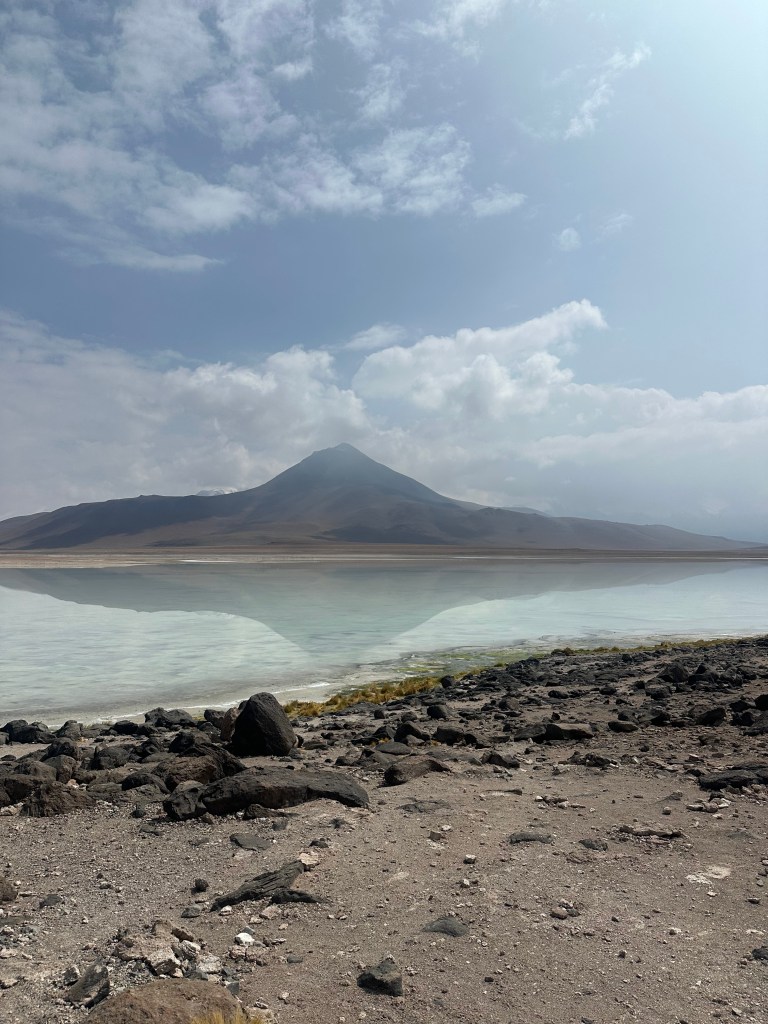
Our first major stop was Laguna Blanca, an otherworldly white salt lake that sits at the base of not one but two massive 6,000-meter volcanoes. As we stepped out of the Land Cruiser, the cold air hit our lungs, but the view instantly made us forget any discomfort. The lake’s surface was a brilliant white, reflecting the perfect cones of the volcanoes like a mirror. Eduardo told us that the white color comes from minerals suspended in the water – borax and other salts that create the milky appearance.
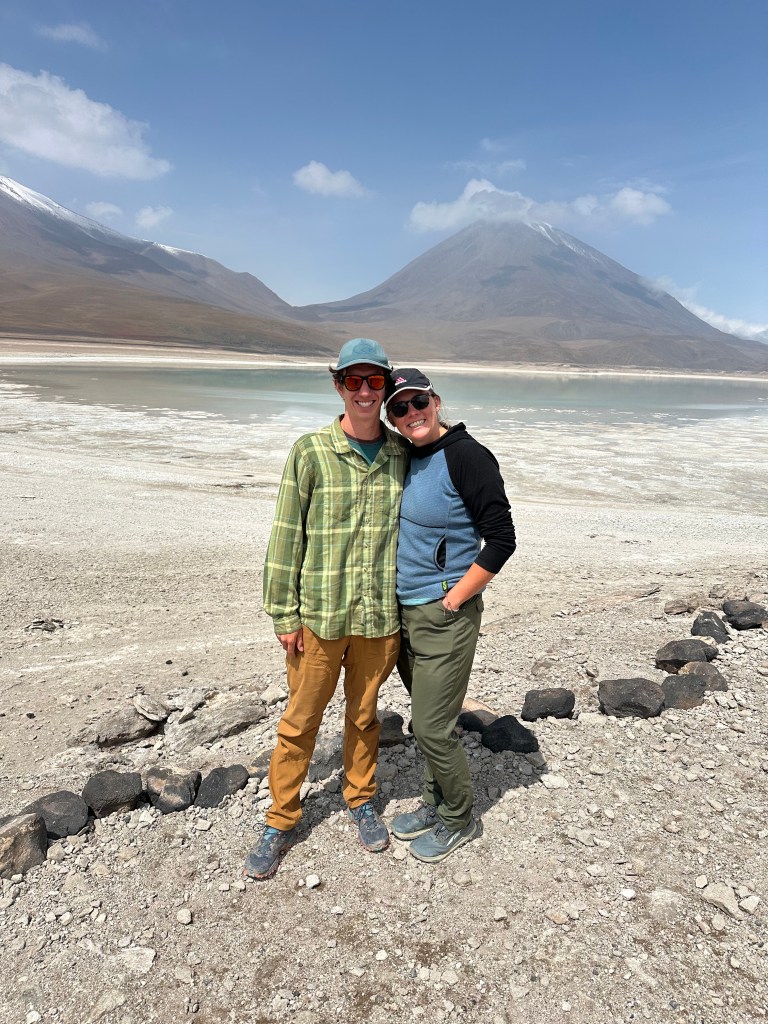
“Those volcanoes,” Eduardo said, pointing to the massive peaks, “mark the border between Bolivia and Chile. The one on the right is Licancabur, which you could see from San Pedro.” It was mind-boggling to think that just hours ago, we were looking at these same mountains from the opposite side. Small vicuñas grazed on the sparse vegetation around the lake, seemingly unaffected by the harsh conditions.
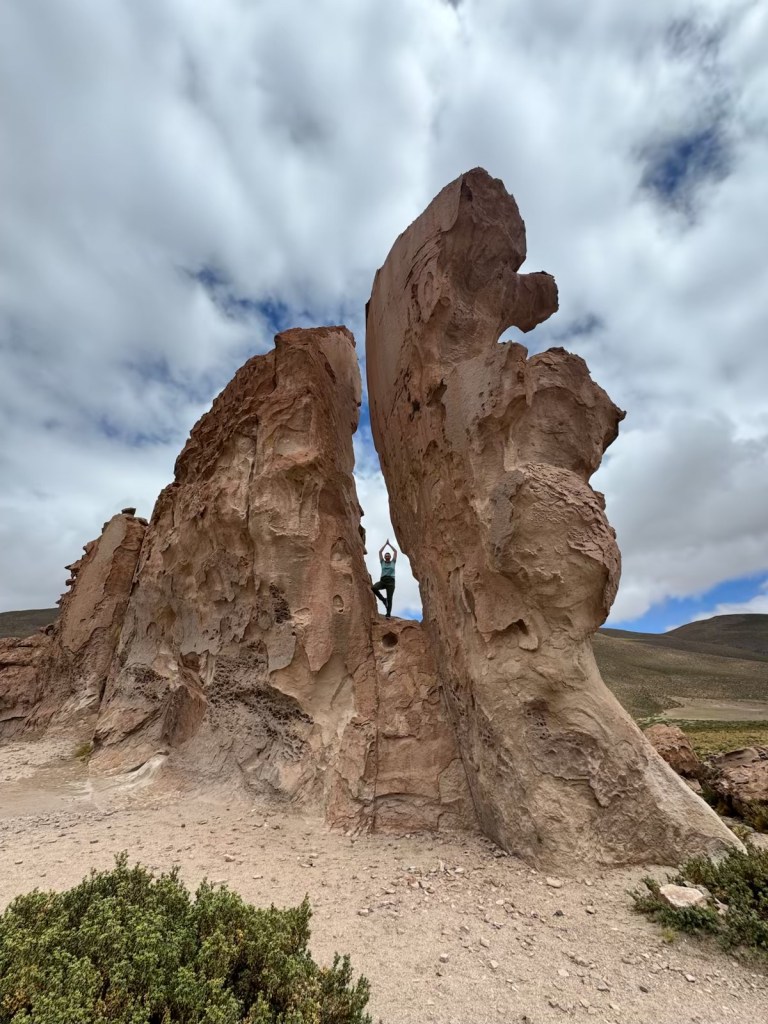
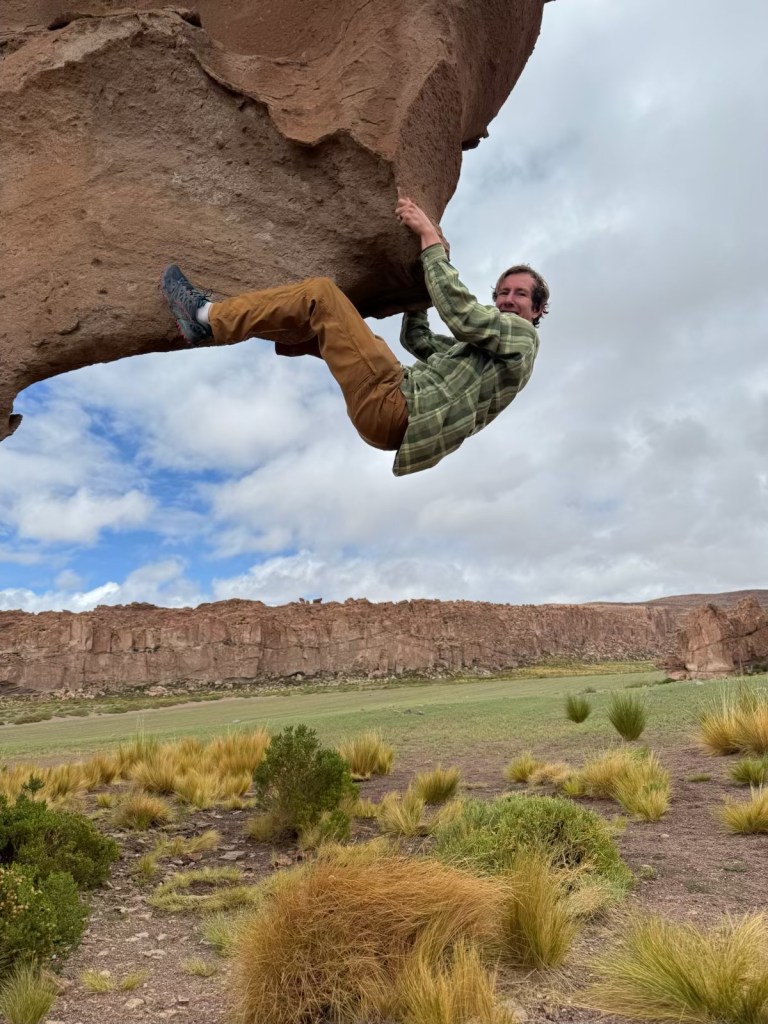
After Laguna Blanca, we continued our journey to what Eduardo called the “Salvador Dali Desert,” and it quickly became clear why. The landscape looked like it had been painted by the surrealist master himself with weird rock formations carved by wind erosion standing before us while in the distance, mountains in impossible shades of red, orange, and purple layered upon each other. The complete absence of vegetation made the scene even more surreal.
We spent our first night in a very basic hostel in a tiny settlement seemingly in the middle of nowhere. There was no heating, and the temperature dropped to well below freezing after sunset. Nikki and I huddled under mountains of blankets and were very grateful for the hot soup and tea that our hosts had prepared for dinner.
Dawn came early, and after a quick breakfast, we were back on the road, this time heading toward an active geyser field called Sol de Mañana (Morning Sun). As we approached, the smell of sulfur grew stronger, and soon we could see plumes of steam rising from the earth. The geysers weren’t the tall water spouts I had expected, but rather bubbling mud pots and steam vents that created an eerie, primordial landscape.
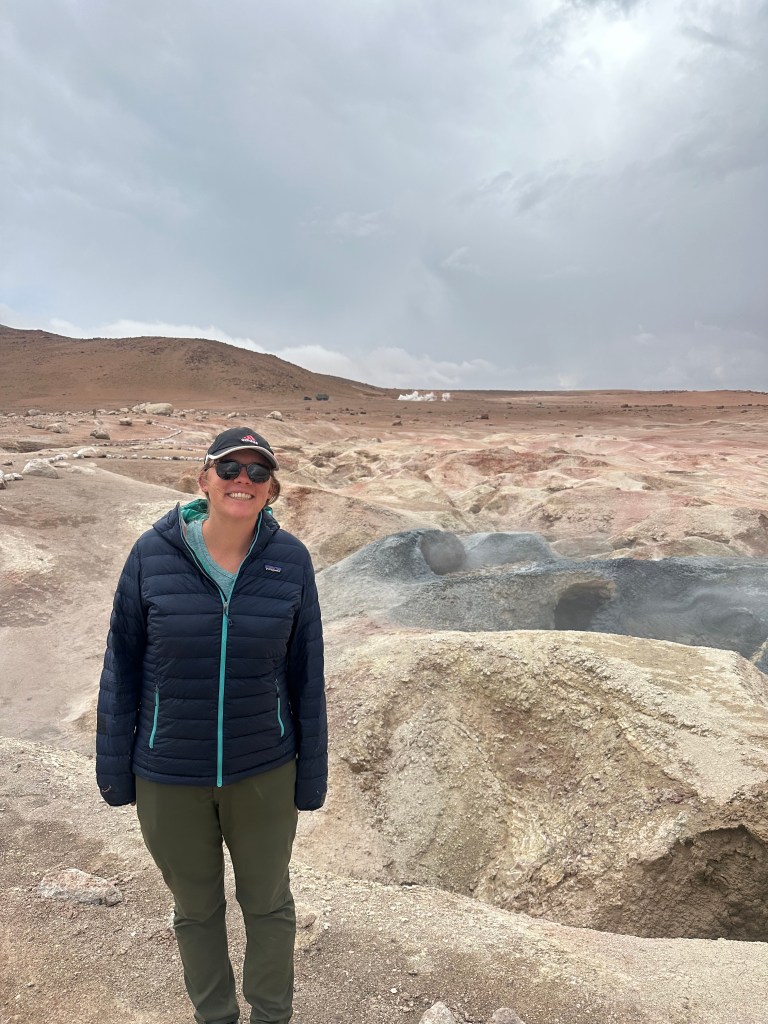
After exploring the geysers, Eduardo surprised us with a true highlight – a visit to natural hot springs with panoramic views over an altiplano lake. As we approached, we could see steam rising from a series of stone-lined pools built right at the edge of the lagoon. We changed into our swim suits and enjoyed relaxing in the hot springs with views of flamingos feeding in the lake and 19,000 foot volcanoes in the distance.
We soaked in the mineral-rich waters for over an hour, taking in the surreal beauty of our surroundings. The juxtaposition of being comfortably warm while gazing out at such a stark, challenging environment felt like the height of luxury. It was one of those perfect travel moments where you can’t quite believe where you are and you just have to sink into yourself to appreciate life.
By midday, we reached what many consider the crown jewel of the Bolivian Altiplano – Laguna Colorada (Red Lagoon). As we crested a ridge, the lake came into view and blew us away.. The water was a deep rust red, created by algae that thrive in the mineral-rich water. But what made the scene truly spectacular were the thousands of Andean and Chilean flamingos that dotted the lake like pink exclamation points against the red backdrop.
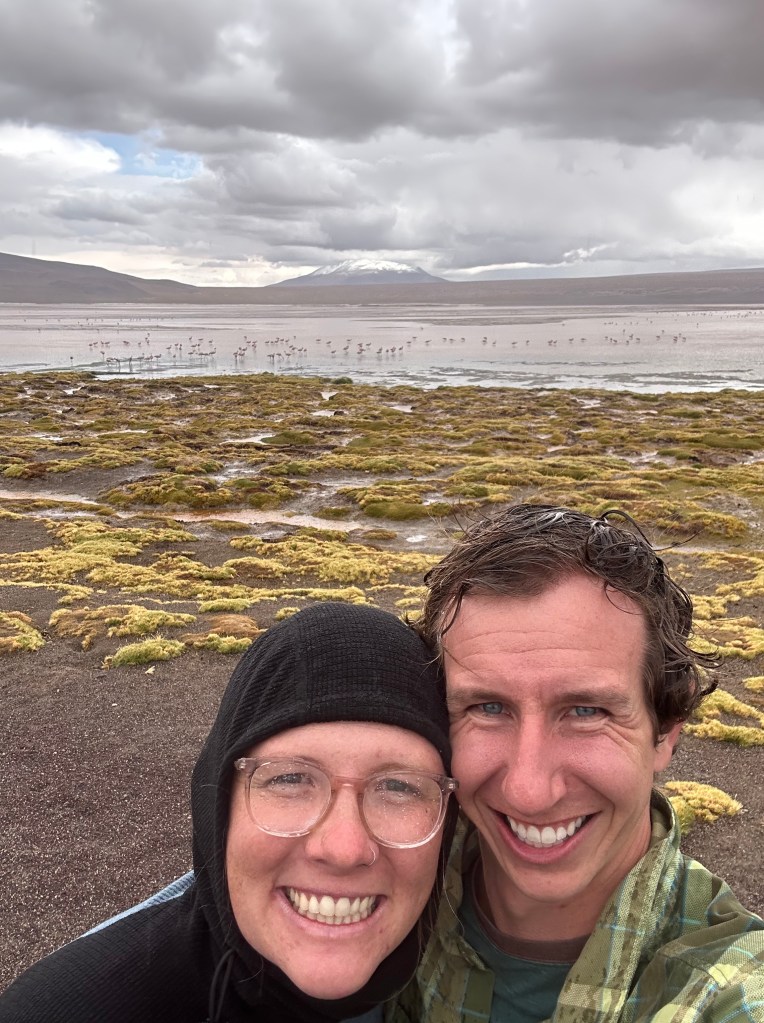
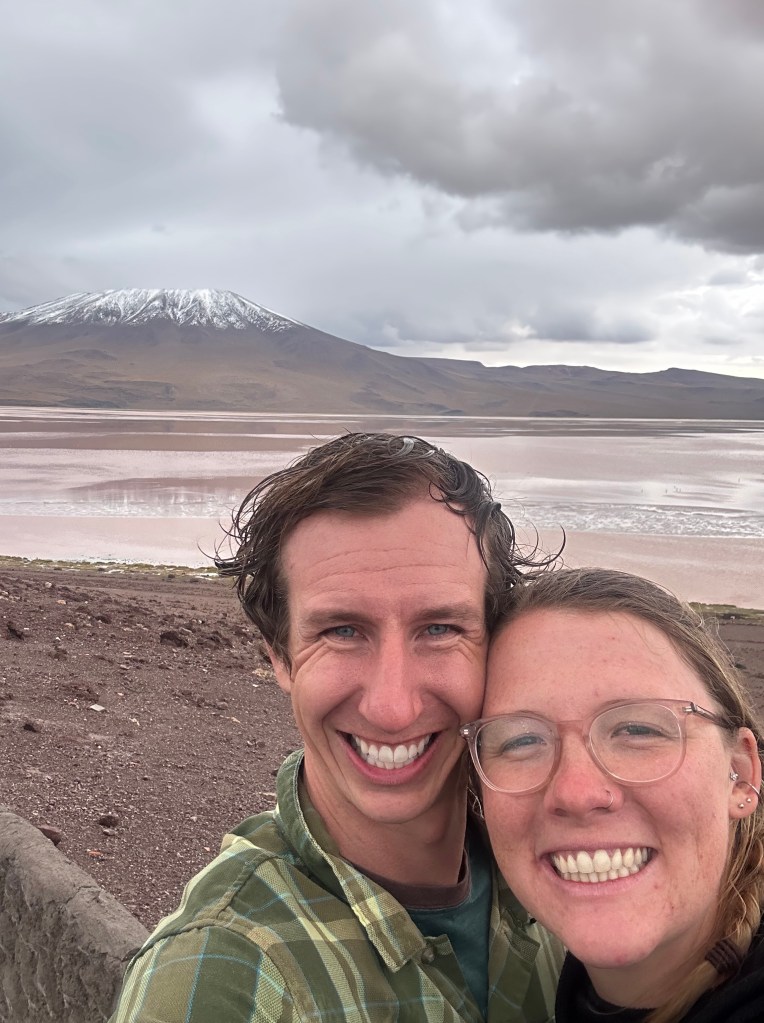
Even though it started to rain on us, we spent over an hour at Laguna Colorada, watching the flamingos and marveling at both their sheer numbers and beauty.The shoreline was crusted with white borax deposits, once again creating that snow-like appearance that had fascinated us in Valle de Luna. The contrast between the white shore, red water, and pink birds against the blue sky was almost too perfect to be real.
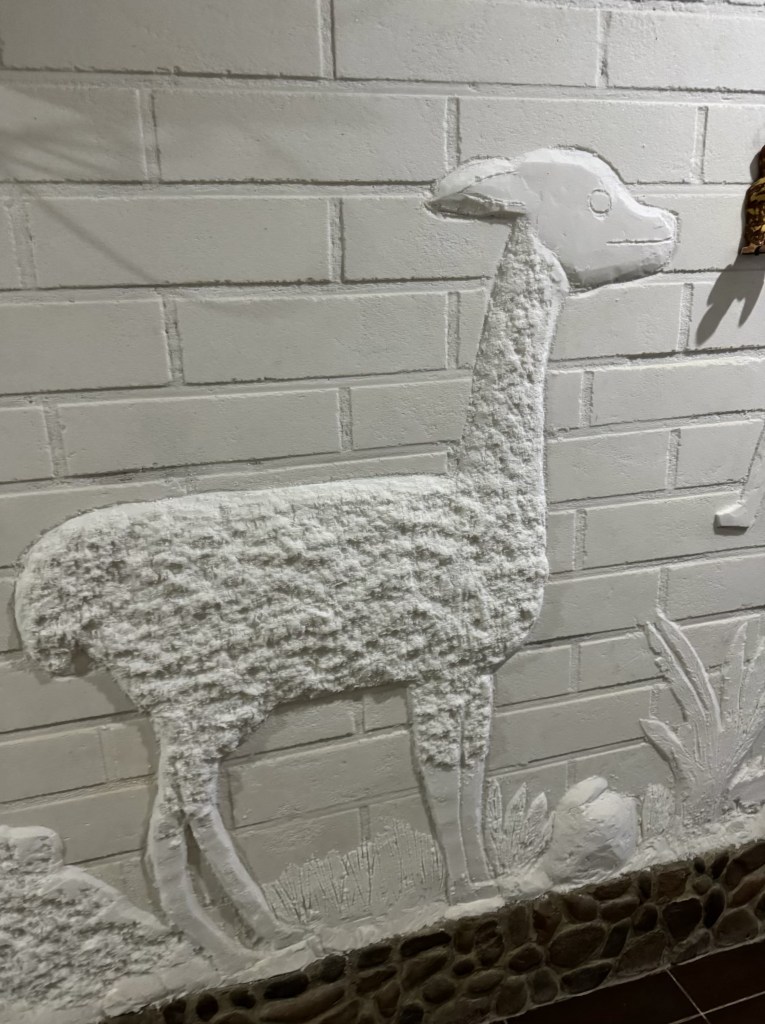
Our second night was spent in very unique hotel that was entirely made of salt! Everything from the walls to the bed platforms were made from salt blocks. Of course we had to lick a wall to confirm it was indeed all salt. That night we had a massive thunderstorm roll through which knocked out the power for the evening but we were happy to huddle in our salt bed.
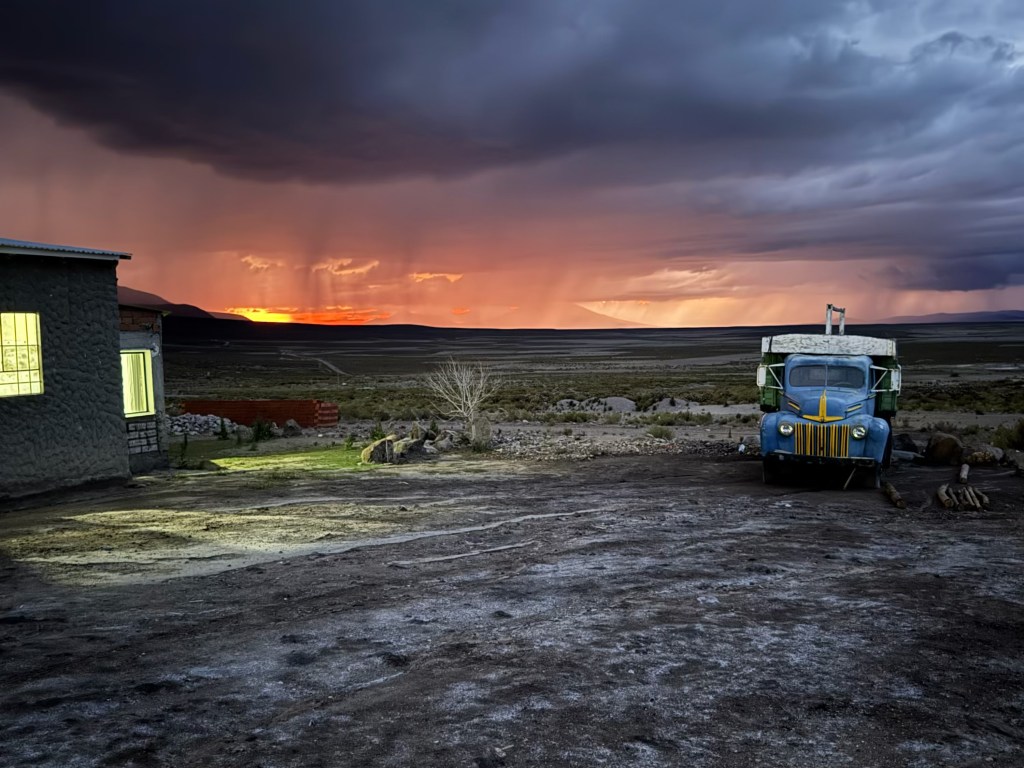
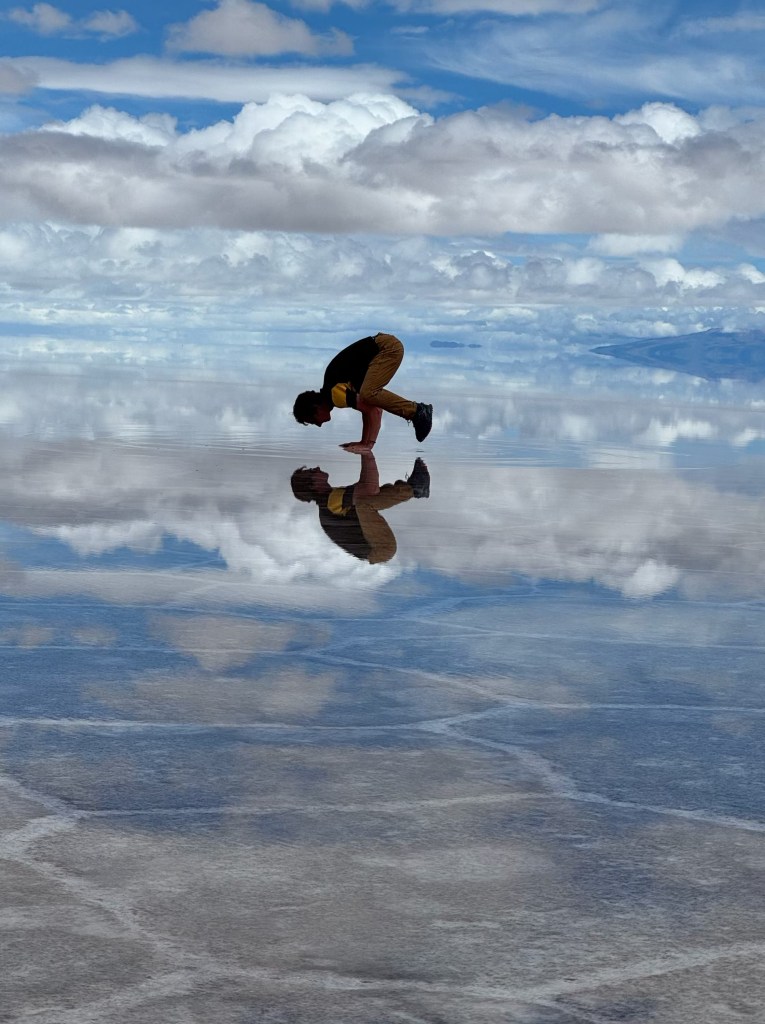
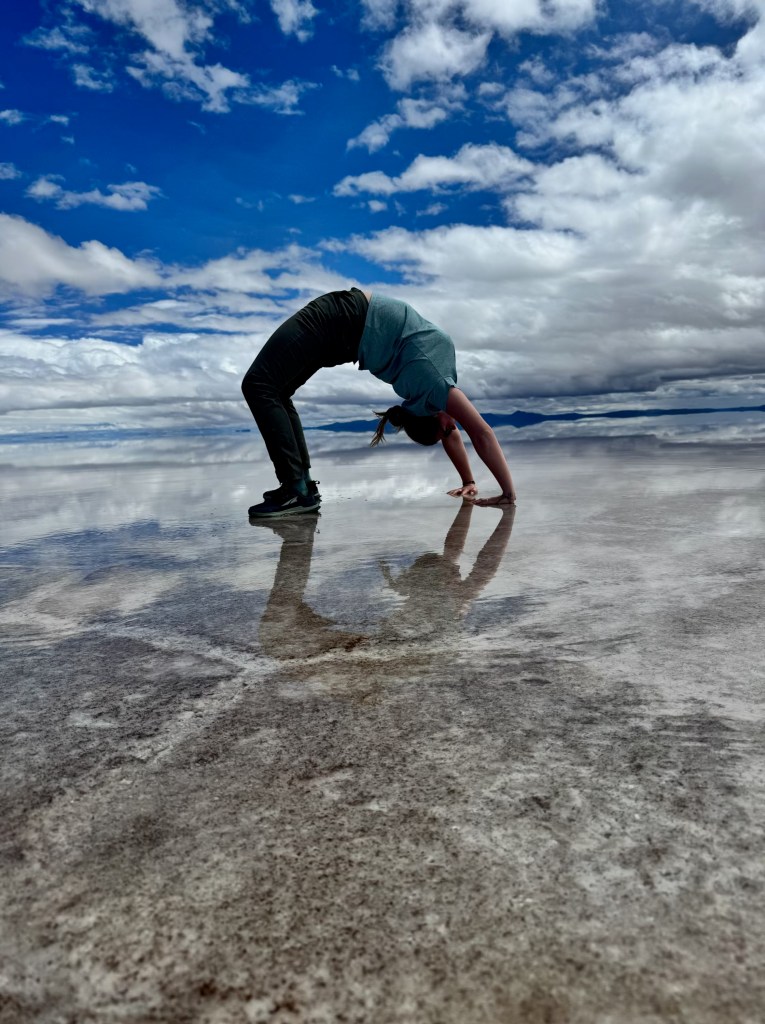
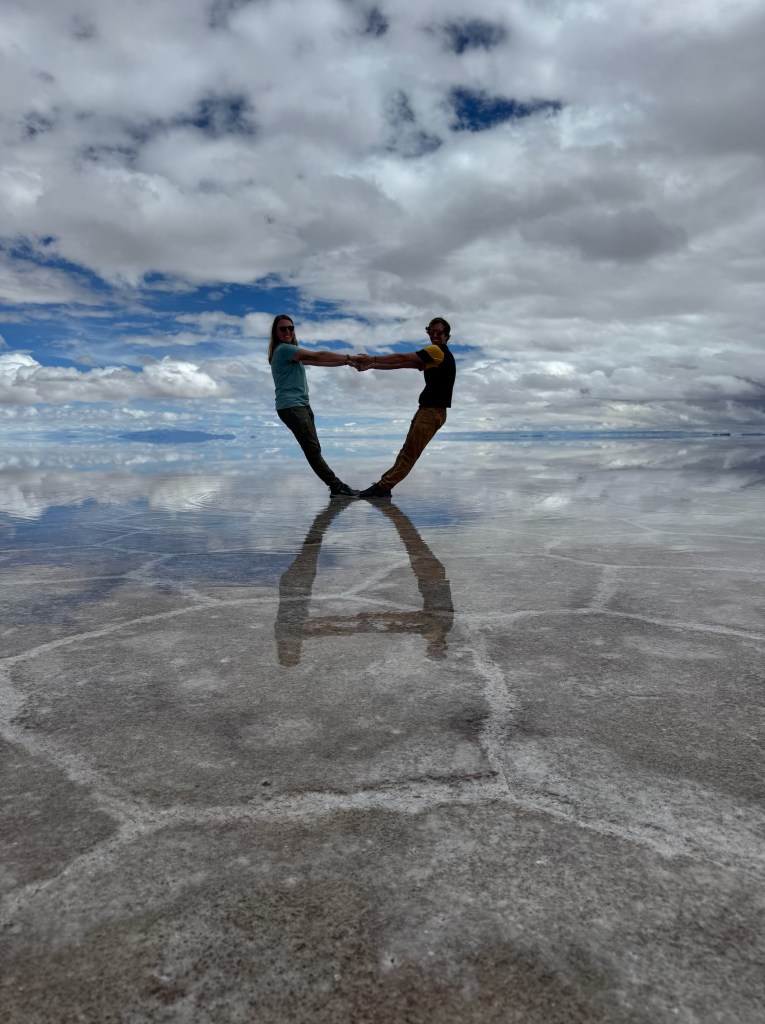
On the third day, we finally reached the edge of the main attraction – the vast Salar de Uyuni, the world’s largest salt flat. The timing of our visit couldn’t have been more perfect. We had arrived during what locals call the “mirror season,” when a thin layer of water covers parts of the salt crust, creating a perfect reflection of the sky above and the thunderstorm from the night before ensured the entire salt flat was covered in an inch of water.
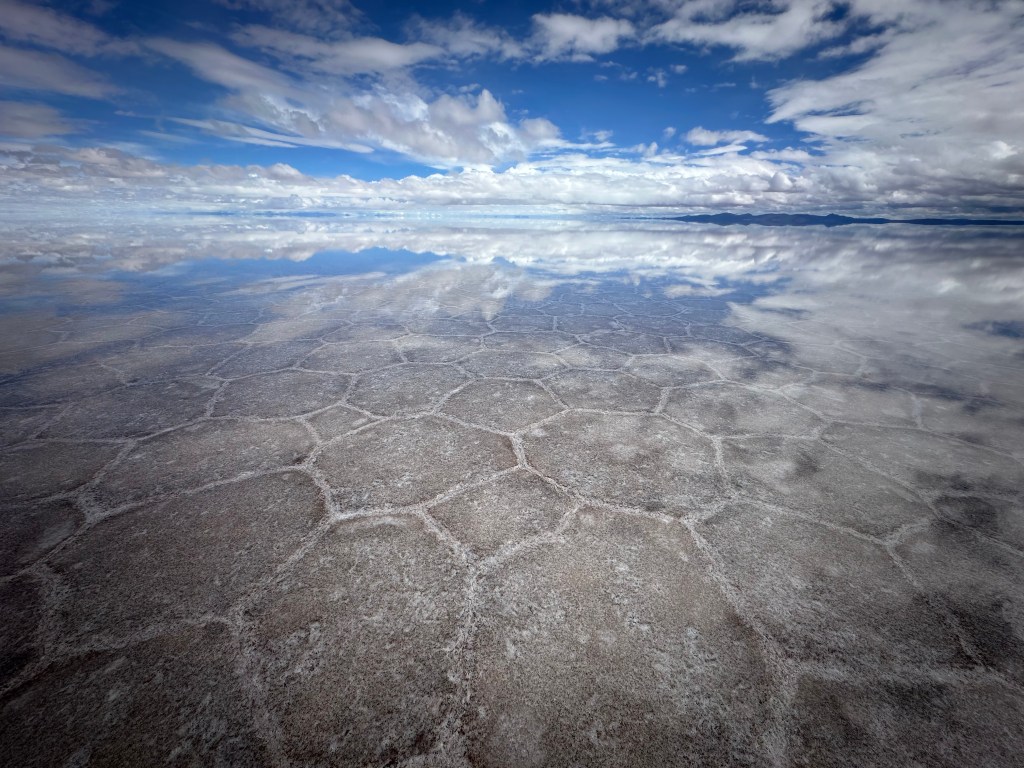
As our Land Cruiser slowly drove onto the flooded salt flat, it felt like we were driving directly into the sky. The boundary between earth and heaven disappeared completely, creating the illusion that we were floating in an infinite blue expanse. Eduardo stopped the vehicle in the middle of this surreal mirror world, and we carefully stepped out into the otherworldly landscape.
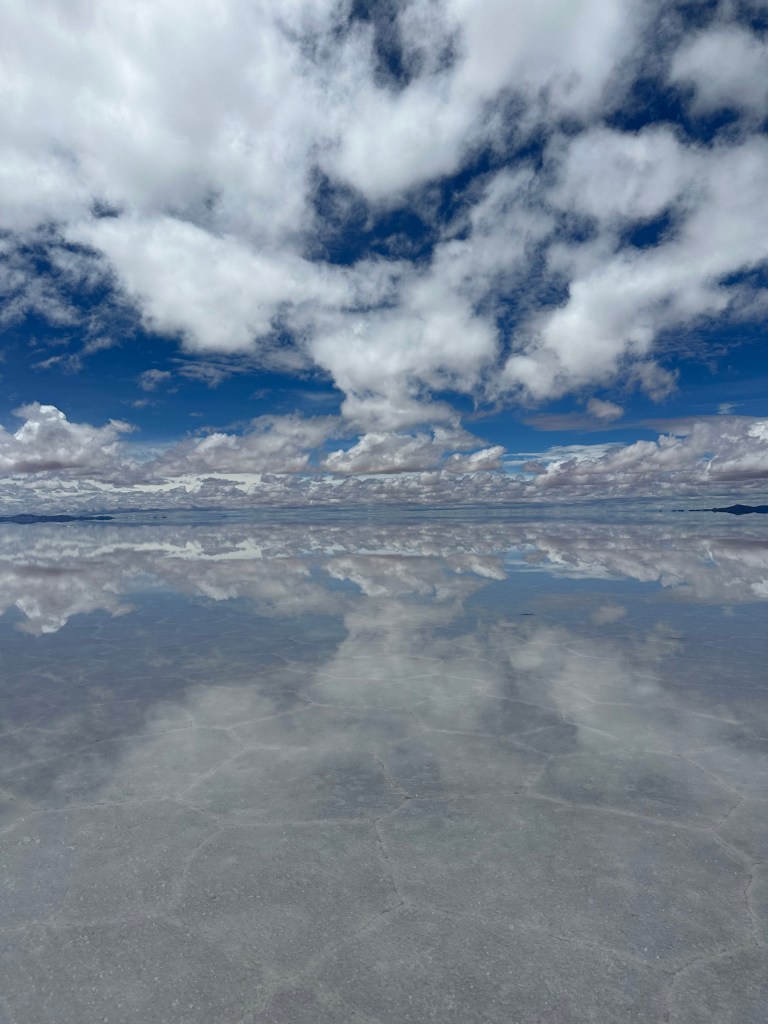
“Perfect for the photos,” Eduardo smiled, clearly familiar with what tourists want from this unique landscape. And he was right. We spent the next two hours taking some of the most incredible photos of our entire journey. The perfect reflection created mind-bending optical illusions – Nikki appearing to stand on her own reflection and both of us appearing to walk through the clouds. The perspective tricks that are possible here are endless, and we laughed like children as we staged increasingly absurd scenarios.
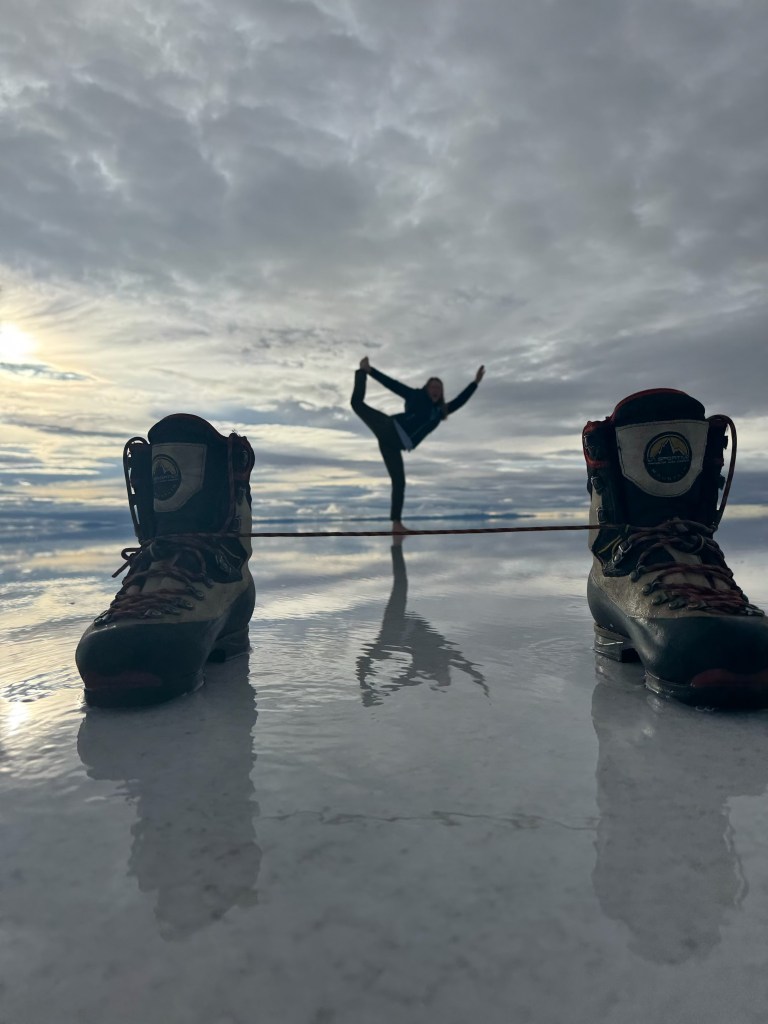
In all of our travels, we have never experienced a place like Salar de Uyuni. The mirror effect was such a unique experience and we highly recommend everyone visit if they have a chance.
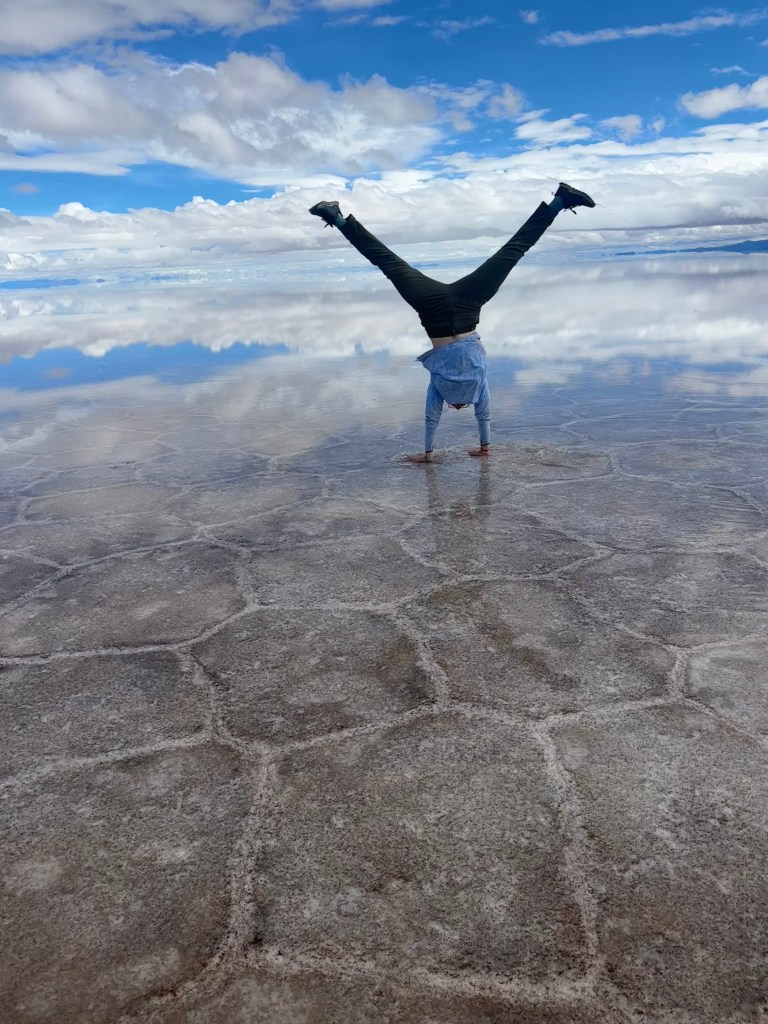
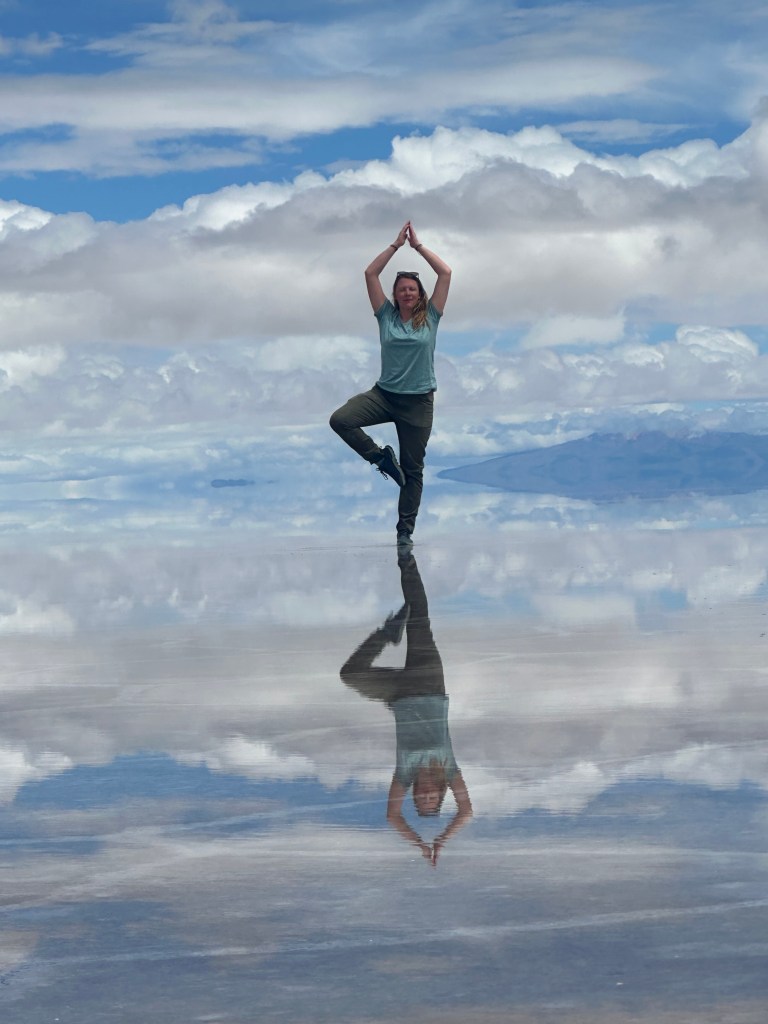
On our final day, we made the long drive back toward the Bolivia-Chile border. The tour was amazing but also exhausting. Each day was 14+ hours but the views and landscapes we saw were absolutely worth it. It was fun to be part of tour for a little bit but there’s something profoundly comforting about returning to your own space after an adventure like this.
When we finally made it back to San Pedro and found Taka exactly as we had left her, we felt whole again. We thanked the host profusely for keeping watch over our home-on-wheels, and that night, as we lay in our own bed in Taka’s snug cabin, we scrolled through the hundreds of photos we had taken.
The mirror images of the Salar de Uyuni, the thousands of pink flamingos at Laguna Colorada, the surreal Salvador Dali landscapes, and the perfect volcanic cones reflected in Laguna Blanca. As sad as it was to leave Taka behind, this 4-day excursion into Bolivia had given us access to some of the most extraordinary landscapes we had ever seen.
 Nikki and Colter's South American Travel Blog