In 2020 when we sadly had to cut our trip of a lifetime short, one of my biggest regrets was not seeing the Atacama desert. As we left the beautiful coastline of the Pan de Azucar and Ruta 1, I knew our next stop was the famous San Pedro de Atacama. We had heard countless tales about the otherworldly landscapes, and we were itching to experience the lunar valleys and salt flats for ourselves.
San Pedro de Atacama is a small desert oasis that has become a major destination for travelers exploring northern Chile. The town itself is charming in a rustic way – adobe buildings line narrow dirt streets, with small shops selling everything from alpaca wool sweaters to locally-made art. We felt that many of the reviews online of the town were too harsh – we enjoyed the little dirt roads and the little restaurants we found along them. Upon arriving we explored the city and got our bearings before heading back out to the desert to find a campsite. We found one of best campsites ever on the backside of Valle de Luna. It was the perfect remote, quiet desert campsite.
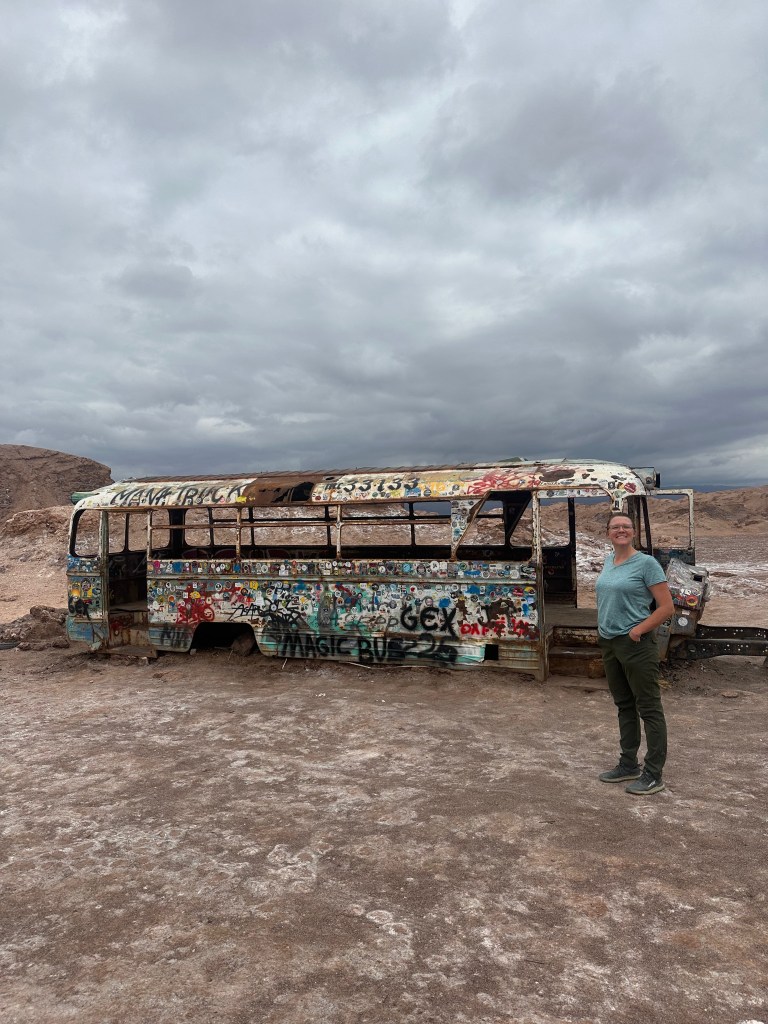
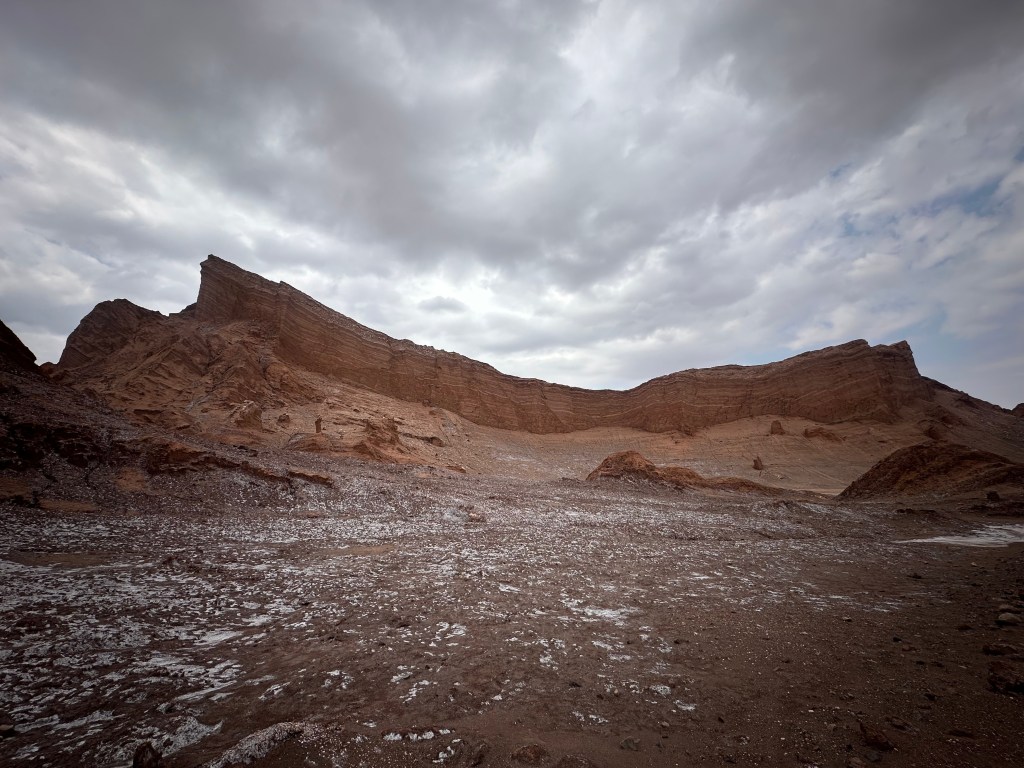
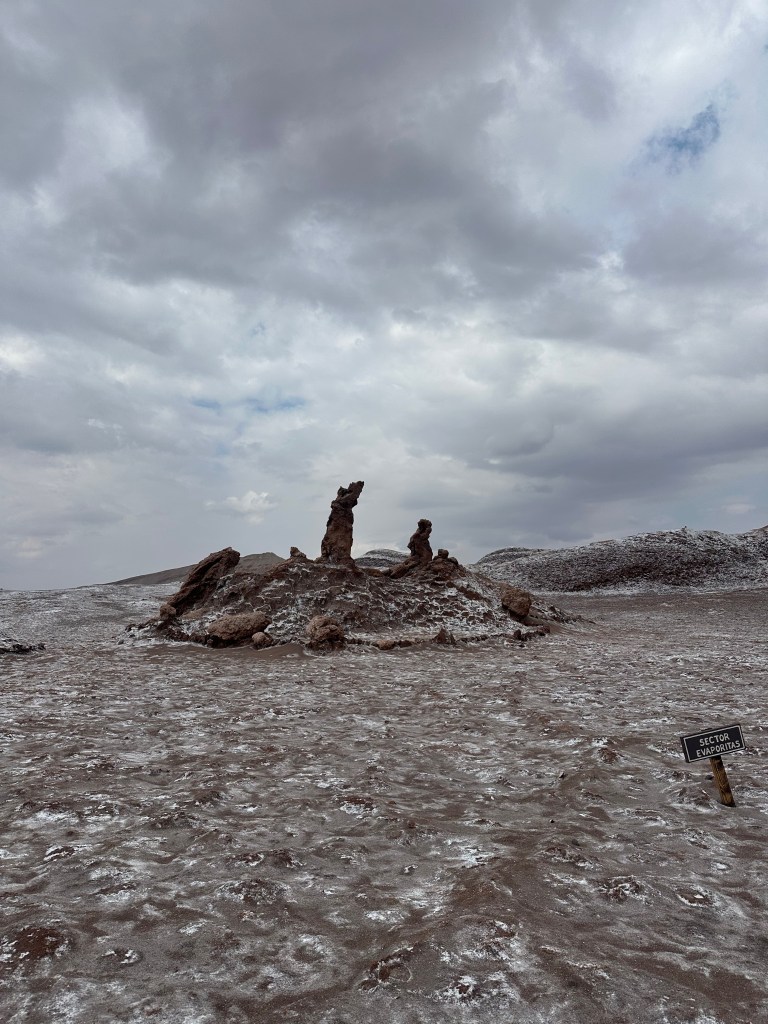
Our first adventure the next day was exploring the famous Valle de Luna (Moon Valley), just a short drive from town. A big benefit to overlanding is being able to take our own car to explore places, rather than joining a tour, which gave us the freedom to explore at our own pace. As we drove through the entrance gate, the landscape opened up to reveal something that truly looked extraterrestrial. Massive sand dunes flanked by jagged salt-crusted rock formations stretched as far as we could see. The earth around us was a palette of browns, whites, and oranges all crusted with salt.
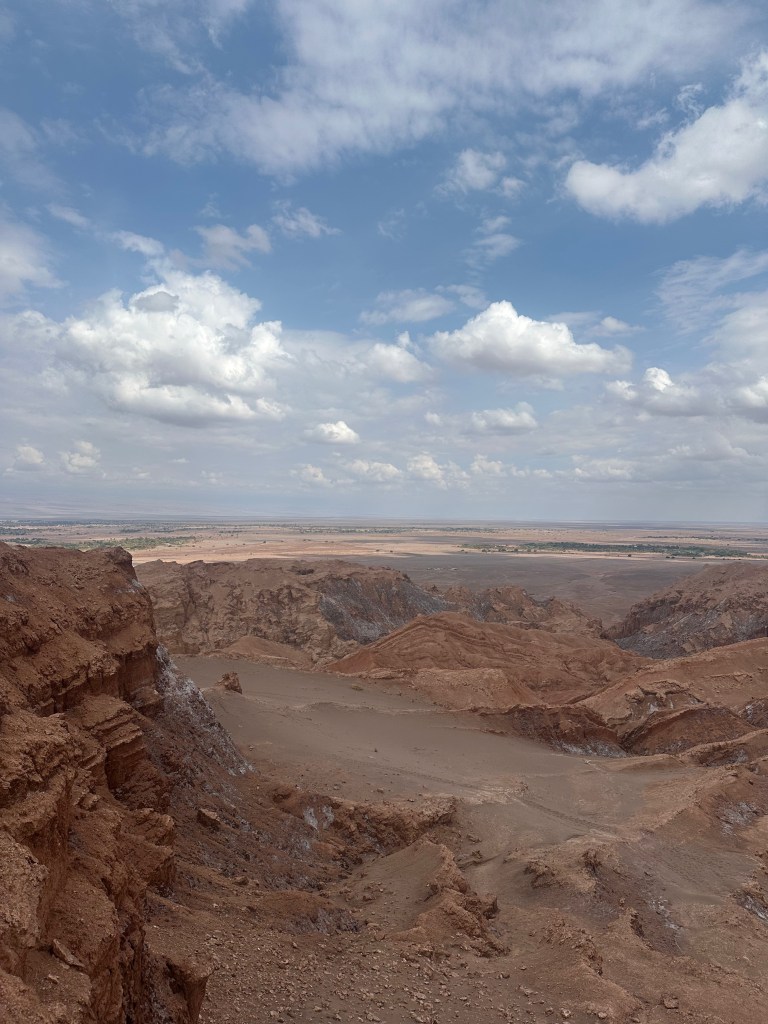
What struck us most was how the salt deposits covering the ground and rocks created an illusion of freshly fallen snow. In some areas, the white coating was so thick and pristine that we had to remind ourselves we were in one of the driest deserts on Earth, not a winter wonderland. The contrast between the brilliant white salt and the rusty red earth beneath created a surreal landscape that seemed to belong to another world entirely. When the sunlight hit these salt-crusted areas, they sparkled like fields of diamonds against the harsh desert backdrop.
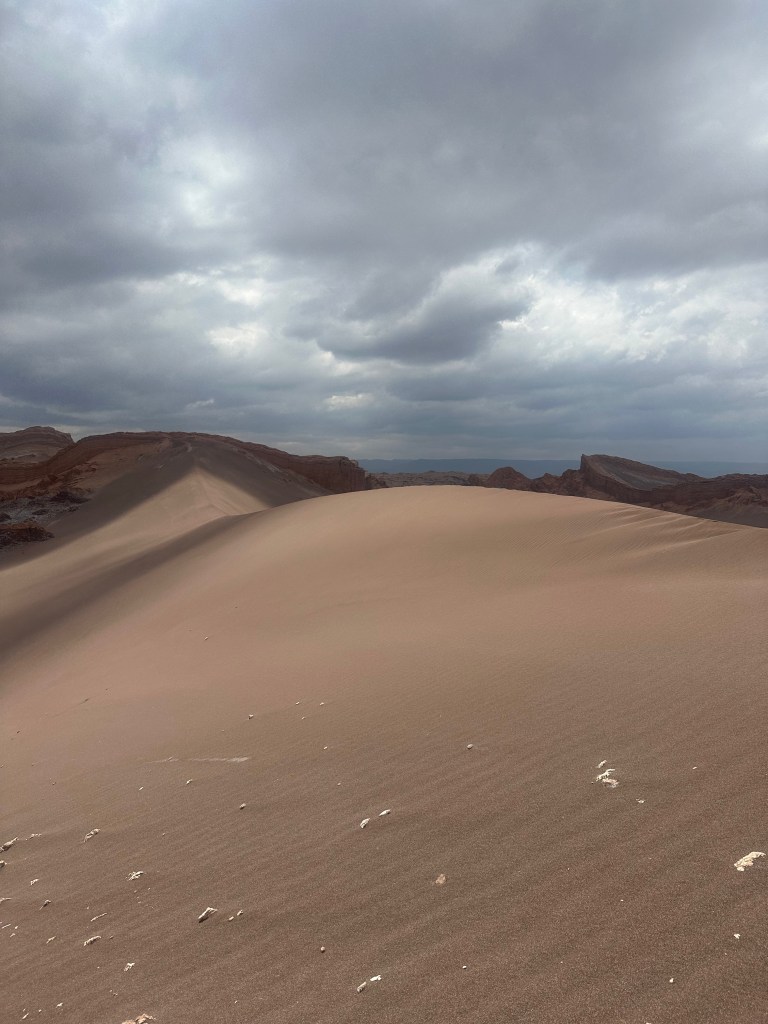
We parked Taka at one of the designated areas and hiked up to the ridge of a massive dune. The climb wasn’t long, but the views from the top were absolutely worth it. Below us, the salt crusted valley gave way to the distant Licancabur volcano which provided a perfect backdrop. We stayed until sunset, watching as the entire valley transformed in the golden light, the shadows stretching across the salt plains and the rocks taking on an almost fiery glow. It was easy to understand why NASA has used this place to test Mars rovers – it really does feel like another planet.
The next day, we decided to seek some relief from the desert heat by visiting Laguna Cejar, a salt lake about 30 minutes from San Pedro. We had been told that the water was so saline-dense that floating was effortless – something we had to experience for ourselves. The road to the lagoon was rough, and I was grateful for Taka’s sturdy suspension as we bounced along the washboard dirt tracks.
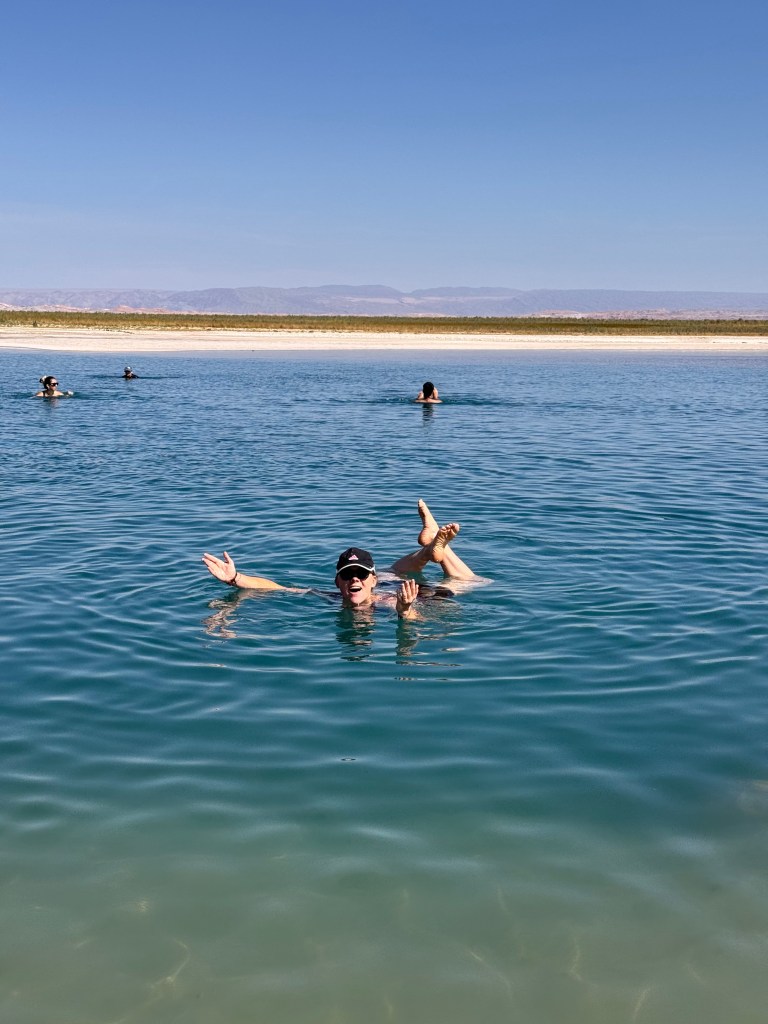
When we arrived, the lagoon appeared like a mirage – a pool of impossibly blue water surrounded by white salt crusts and distant volcanoes. It was crazy to see a reasonably sized lagoon in the middle of the desert. We changed into our swimsuits and cautiously approached the edge of the lake. Before even reaching the edge of the water, we could taste a faint but noticeable salty flavor in the air. But the real shock came when I eased myself in and immediately bobbed to the surface like a cork! Nikki laughed as she joined me, and soon we were both floating effortlessly, our bodies suspended in the dense, mineral-rich water.
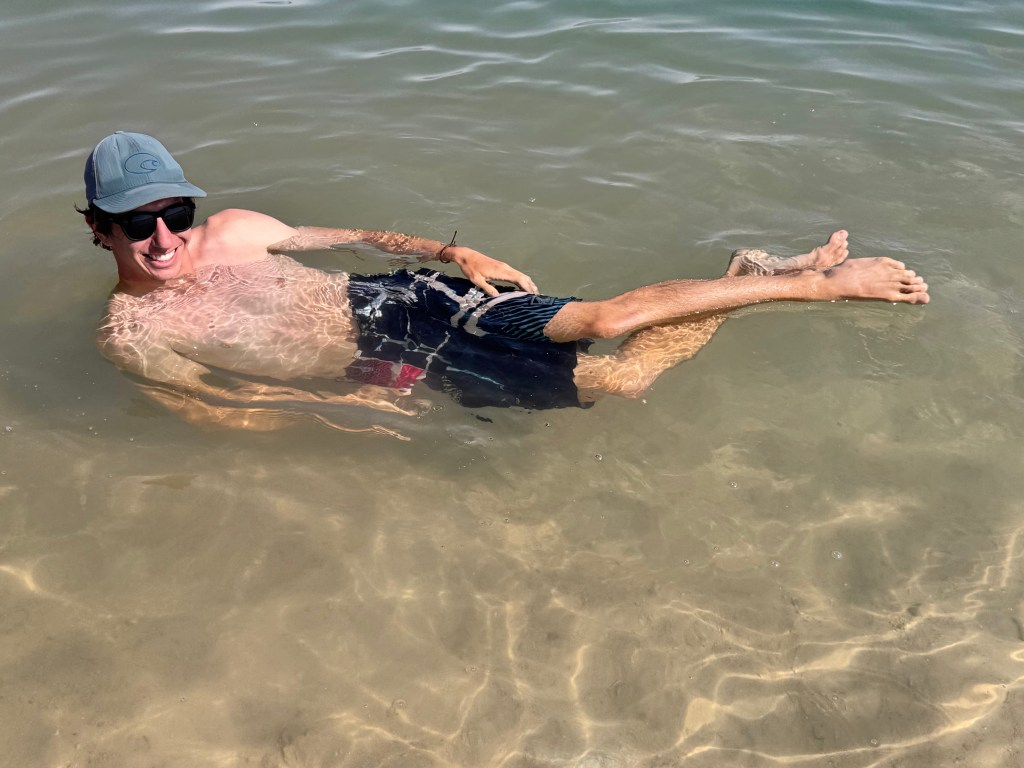
“This is crazy!” Nikki exclaimed as she tried, unsuccessfully, to touch the bottom while floating. Here whole body was vertical like a pencil but still she floated effortlessly. The experience was surreal – we lounged in the water, staring up at the perfectly blue sky while being completely supported by the saline solution. The only downside was the warning we had received about not getting the water in our eyes or any cuts – the salt concentration did sting any minor cut terribly. After about half an hour of floating, we reluctantly got out, immediately feeling the salt crystalizing on our skin as the water evaporated in the dry desert air. The nearby shower facilities were great, allowing us to rinse off before the salt completely encrusted us.
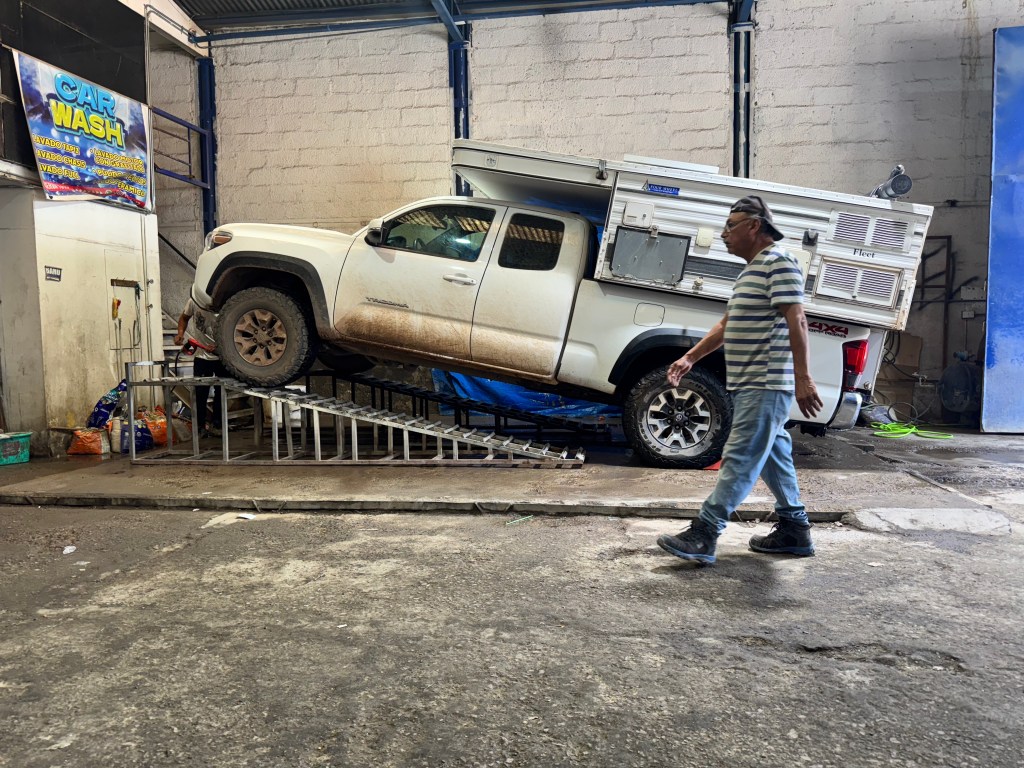
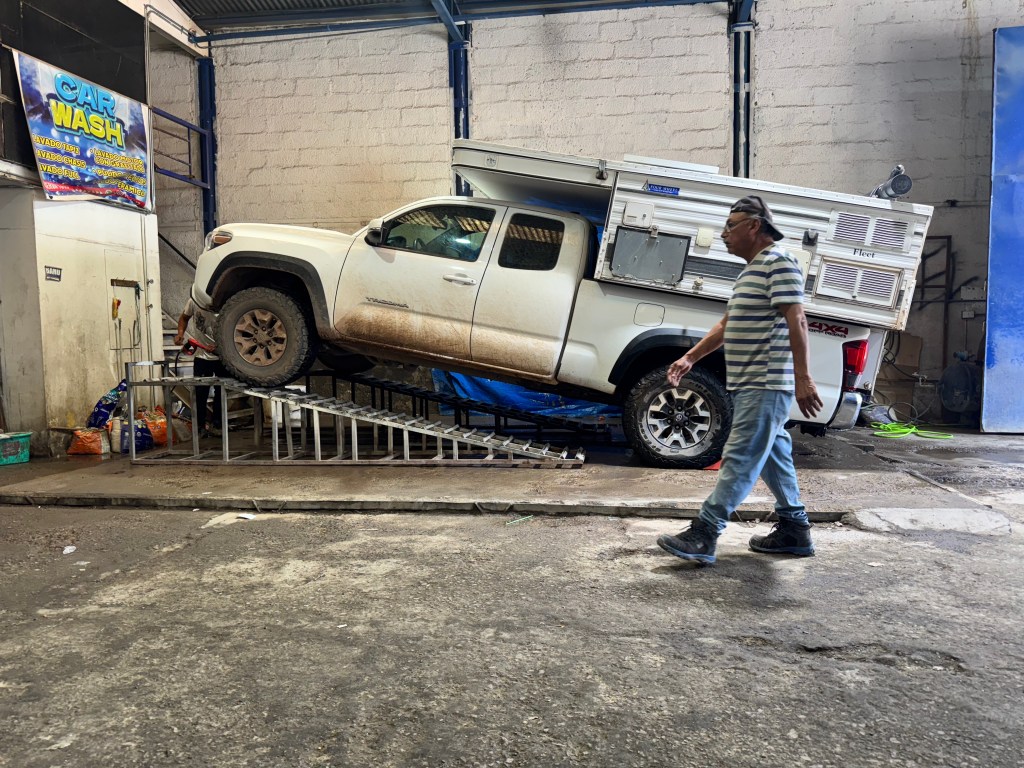
Our final day in San Pedro was spent tackling some much-needed maintenance on Taka. The rough desert roads and extreme temperature fluctuations had taken their toll, and our trusty truck needed some attention. We found a small mechanic shop where the owner was more than happy to help us change the oil and fix some small alignment issues. He seemed genuinely interested in our truck camper setup and our journey through South America.
The biggest issue, however, was the salt. Taka was covered in a thick layer of salt dust that had accumulated from our excursions around the salt flats and Valle de Luna. “This will eat through your undercarriage if you don’t get it off,” the mechanic warned us in Spanish. He directed us to a car wash on the edge of town that specialized in cleaning vehicles that had been out on the salt flats. We spent almost two hours at the car wash, where they meticulously pressure-washed every nook and cranny of Taka’s underside, wheel wells, and engine compartment. The amount of salt that washed away was astonishing – creating small white rivers that flowed across the concrete pad.
As we prepared to leave San Pedro de Atacama the next morning, we found ourselves feeling a bit melancholy. There was still so much to see in the area – the El Tatio geysers, the high-altitude lagoons with their pink flamingos, the ancient petroglyphs scattered throughout the canyons. But we had scheduled a tour to cross into Bolivia to explore the Salar de Uyuni.
Our departure, however, didn’t go quite as planned. The night before we were set to leave, we decided to risk eating some leftover pesto and gnocchi that might not have been sufficiently refrigerated. By midnight, both Nikki and I were violently ill with food poisoning.
We spent a miserable night taking turns rushing out of Taka into the cool desert air. The temperature in the Atacama drops dramatically at night but luckily it wasn’t the coldest night of our trip… Either way there we were, sick as dogs, shivering in the moonlight. At one point, I remember looking up at the star-filled sky between bouts of nausea and thinking that even in our misery, the beauty of this place was undeniable. I really could not think of a better view while having food poisoning. By morning, we were exhausted and dehydrated but thankfully the worst had passed and we felt well enough to join our tour to Bolivia.
It wasn’t exactly how we had planned to end our time in San Pedro, but it certainly gave us a story to tell. Throughout the journey, we’ve learned that not every experience on the road is Instagram-worthy (and we are notoriously bad at posting online, although Nikki has made a resolution to do better in sharing our journey), but even the challenging moments become part of the adventure. Still feeling a bit queazy, we pulled into a parking lot/overlander campsite that was going to watch Taka while we were on the Bolivian tour. Immediately as we parked, we were met with a familiar face. One of the Swiss couples that had shipped to Montevideo on the same day as us was in the campsite! It was great to reunite with them and share stories of our travels. We grabbed dinner and a drink with them, comparing schedules and swapping stories. We decided to meet again in Cusco, Peru when we both planned to be there.
We then joined our tour group and started the drive to the Bolivian border. The Atacama Desert had delivered on its promise of otherworldly beauty, and Taka had once again proven to be the perfect companion for exploring such remote and challenging terrain – even if we sometimes make ourselves sick with our own cooking.
 Nikki and Colter's South American Travel Blog