After our time in Mendoza, our journey continued into the mystical Valle de Elquí. Known both for its crystal-clear night skies (home to several major international observatories) and as the birthplace of Chile’s beloved pisco.
We drove along winding roads that followed the Elquí River, watching as the landscape gradually transformed around us. The valley floor was a patchwork of vibrant green vineyards, stark against the arid brown mountains that rose steeply on either side. This contrast is what makes Elquí so special – the river brings life to the valley, creating this lush oasis in what is otherwise the edge of the Atacama, one of the driest places on earth.
Our first stop was in the small town of Vicuñas which reminded us of Santa Fe due to its fun art scene in the desert. We found a perfect campsite just outside of the city where we could enjoy the dark sky designation of the area. The night skies did not disappoint – we have never seen stars so bright or so numerous.
The following morning, we headed to one of the region’s local distilleries, Pisquera AbA. The tour began in the vineyards, where our guide explained how the unique microclimate of the valley – hot, dry days and cool nights – is perfect for growing the Muscat grapes used in pisco production. Unlike wine grapes, pisco varieties are selected for their aromatic qualities rather than their flavor profile, as the distillation process concentrates these aromatics.
The tour led us through the full distillation process where the grapes are turned into a wine like drink and then transitioned to more of a brandy or moonshine distillation process. The huge copper pots that captured and refined the alcohol vapors were amazing to see.
The tasting that followed was eye-opening. We learned to sip pisco properly, noting how different it was from other grape brandies we’d tried. We really didn’t know much about different types of piscos and how the aging affected the taste. The younger piscos were vibrant and floral, while the aged reserves had a complexity that reminded me of fine whiskey, with notes of vanilla, caramel, and dried fruits. By the end of the tasting, we’d gained a new appreciation for Chile’s national spirit. While we enjoyed tasting the piscos, we still think the best way to drink pisco is in a pisco sour. Luckily for us, they had a wide variety of bottled pisco sours for purchase. We bought a grapefruit pisco sour bottle and planned to save it for a sunny beach day!
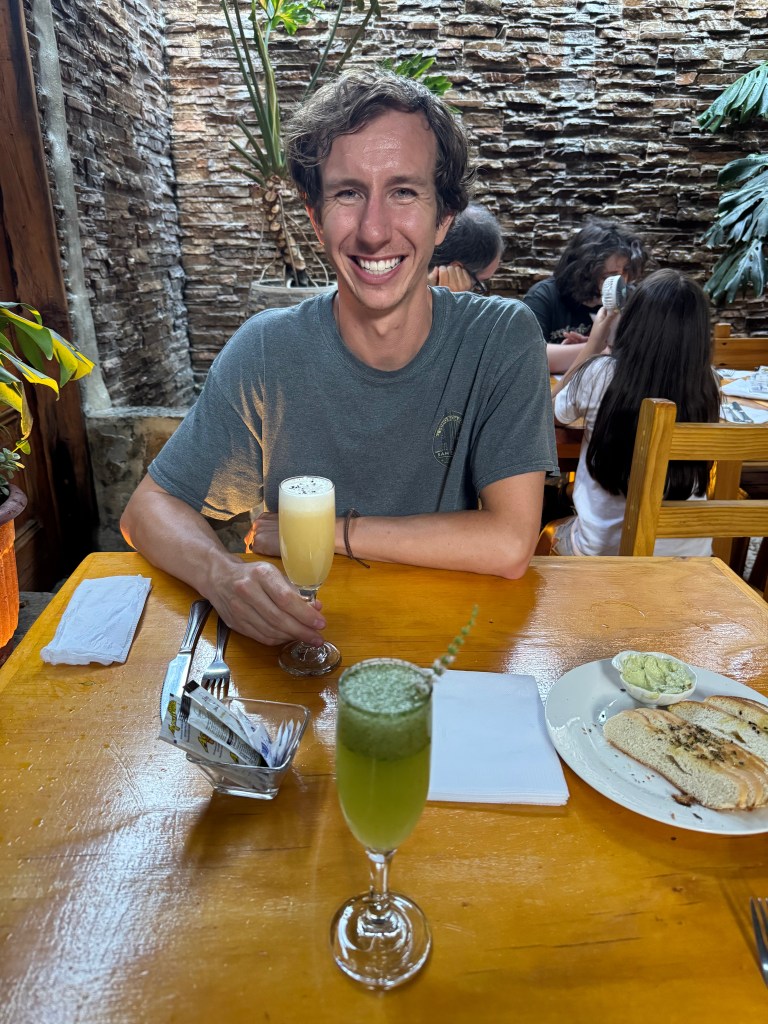
That evening, as we sat outside our camper and reminisced of our time enjoying some of the best wines and piscos in the world between Mendoza and Elquí. While we had thoroughly enjoyed our relaxing days, we were ready to get back to the natural beauty of the Chilean mountains and to get back to hiking! One interesting park that piqued our interest was the remote and rarely visited Nevado de Tres Cruces National Park.
The journey to Tres Cruces was an adventure in itself. We left the Elquí Valley behind and headed eastward, climbing steadily into the high Andes. Taka tackled increasingly rough roads as we ascended, the air growing noticeably thinner with each switchback. The landscape transformed dramatically from the vineyards and river valleys, to rugged mountains with sparse hearty Andean vegetation. Nevado Tres Cruces is so remote that we had to do some calculations to see how much extra gas we needed. Due to the high elevation we had greatly reduced gas efficiency and therefore had to bring an extra 40 liters of gas with us.
We reached the park entrance at around 14,000 feet, where a friendly but surprised ranger checked our permits. He mentioned not many groups make it out this park other than people who want to climb Ojos del Salado, the highest volcano in the world at 22,615’. He and warned us about the altitude, recommending we move slowly and drink plenty of water. We knew the drill from previous high-altitude adventures but were grateful for his concern.
The centerpiece of Nevado de Tres Cruces is the stunning Laguna Verde, a saline lake shimmering with an almost unreal emerald color due to its mineral content. As we carefully drove the rough track around the lake, we were treated to one of the highlights of the Andean altiplano (high plains) – dozens of flamingos feeding in the shallows, their pink plumage vivid against the green water and blue sky.
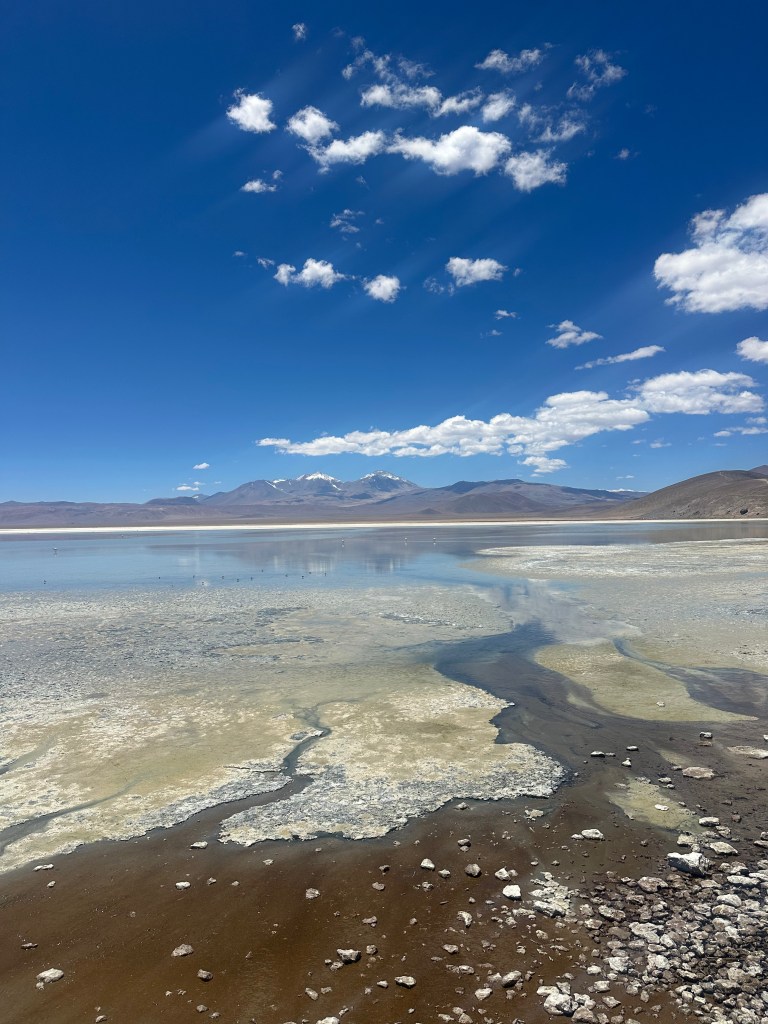
The park ranger joined us while we watched the beautiful scene before us. He mentioned that they have both the Chilean and Andean flamingos here in the park. We spent more than an hour simply watching them feed on the algae and microscopic shrimp. The silence was absolute except for the occasional squawk of the birds and the constant high-altitude wind.
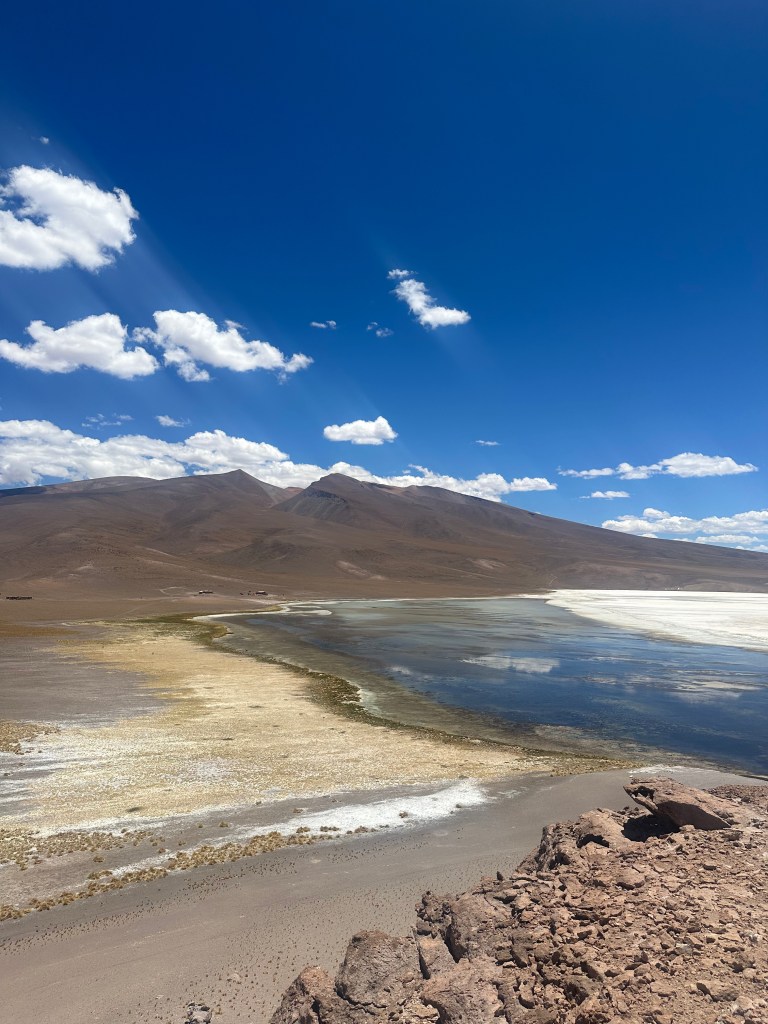
The following day brought our most ambitious drive yet – a slow crawl up the mountain road to over 16,000 feet, one of the highest points we’d ever taken our vehicle. Tony (the truck part of Taka) performed admirably despite the thin air, and we finally reached a viewpoint overlooking not only Laguna Verde but also Laguna Santa Rosa in the distance and an amazing view down the valley we had driven up.
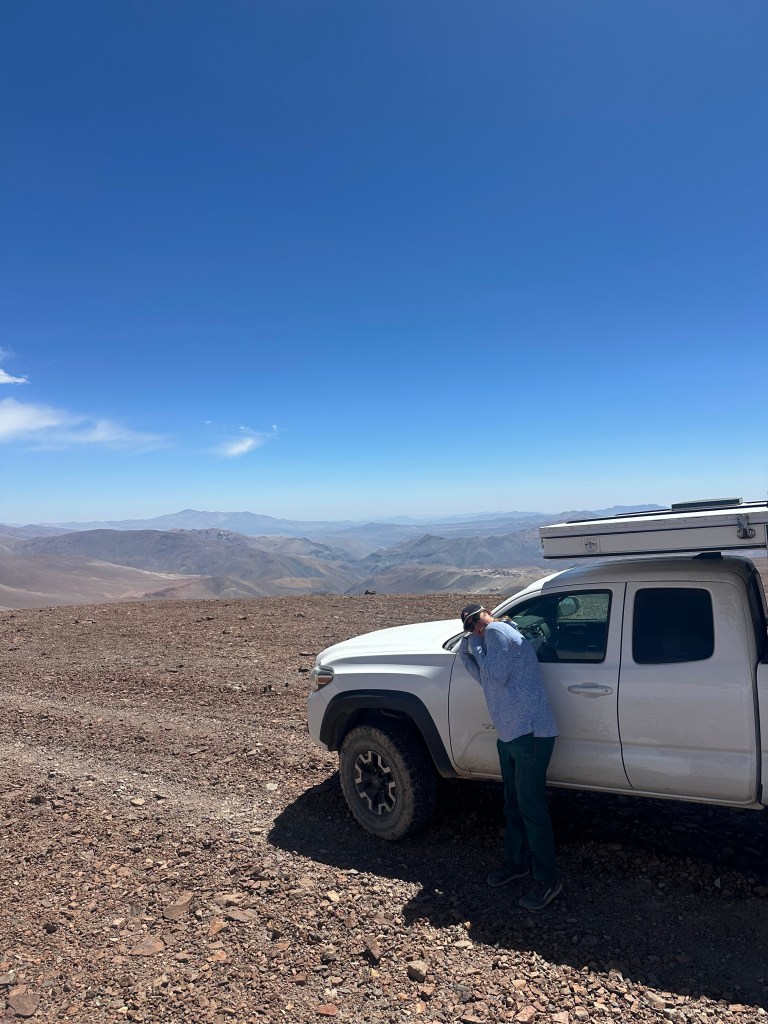
The view from that height was humbling. We could see into both Chile and Argentina, with massive volcanoes and peaks on the horizon. Despite the bitter cold and the challenge of breathing at that altitude, we lingered, mesmerized by the beauty surrounding us. Here Nikki is hugging Tony and thanking him for the trusty ride up the mountain side.
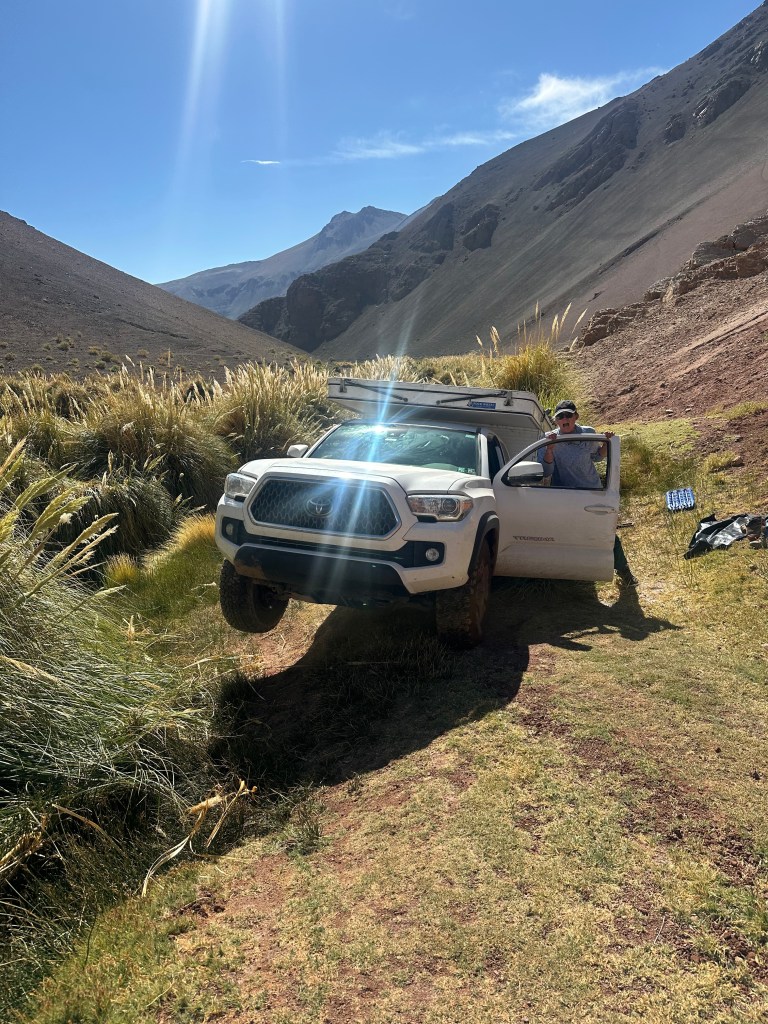
That night we slept at an amazingly remote wild campsite but even that had its own challenges. When we turned off the main road and were 5 minutes from the campsite, we had to shift into 4wd to make it up a steep hill. Unknown to us, at the top of the hill a natural spring had created a 2-3 foot mud pit on the left side of the road. Right as we were about to crest the hill, both of our left tires sunk into a farm pigs heaven – full of slop and mud. The immediate drop made our hearts sink and our front right tire fly into the air. We both knew, we were in a bit of trouble. Getting out of the car we were greeted with a humbling, but in retrospect, pretty cool scene. With both left tires stuck in the mud and only one right tire touching the ground, we knew we had some work to do. We spent the next hour digging out all the mud that we could so we could insert our traction boards under the tires. We then used Taka’s auto climbing mode for the first time on the entire journey to try and escape the bog. What happened next is entirely credited to Nikki’s driving and the off-roading capability of the Tacoma TRD Off-road. The automatic climbing mode took over and sensed which wheels could gain traction. It then sent power to those wheels only. Once Taka started to move, the left wheels hit the traction boards and Take immediately sent power to those wheels. Once the left wheels had traction and power, Taka leapt forward. Nikki expertly steered Taka up and out of the mud pit while narrowly avoiding tipping over due to the unevenness of the road. We were so happy to have gotten through our first time ever getting fully stuck. We deserved our beer that night.
After two days in this otherworldly landscape, we reluctantly began our descent, planning to make our way toward Pan de Azúcar National Park on the Pacific coast. The transition from the extreme heights of the Andes to the sea level of the Pacific was dramatic, and the change in ecosystems equally so.
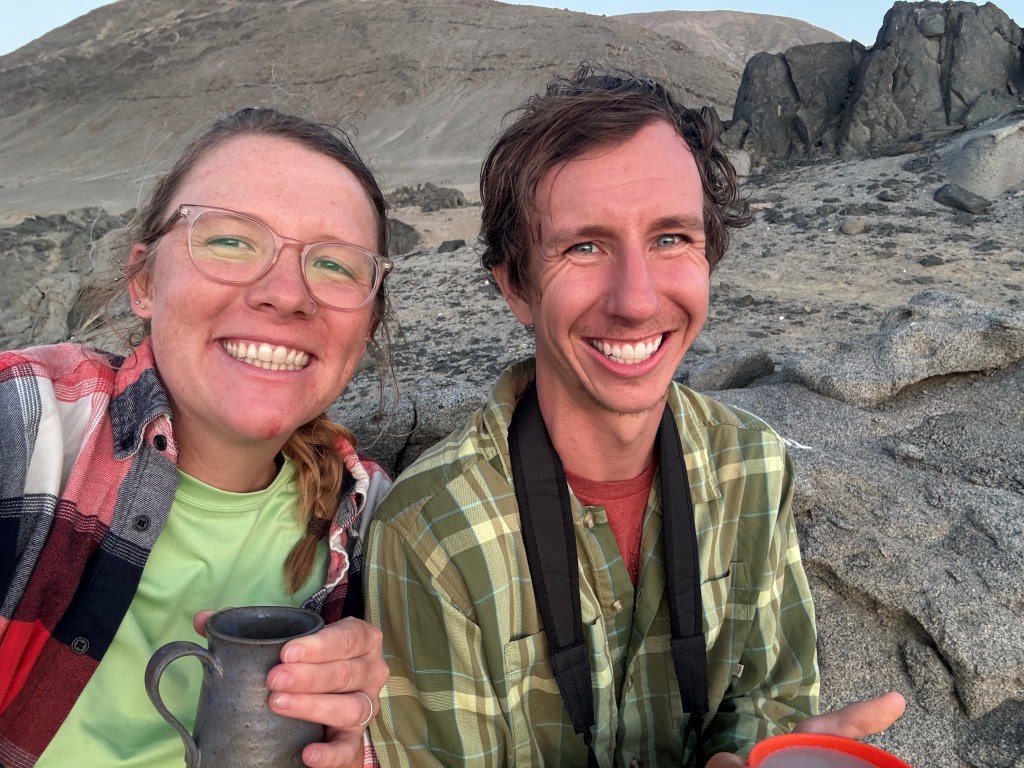
Pan de Azúcar marks the point where the Atacama Desert meets the Pacific Ocean, creating a landscape unlike any other. The park is named for the distinctive sugar loaf-shaped island visible from the shore, and our first hike there greeted us with perfect views of this landmark, surrounded by the deep blue of the Pacific. We spent that day hiking the Mirador Trail, which winds along coastal cliffs offering spectacular vistas of the rugged shoreline. The contrast between the parched desert landscape on one side and the endless ocean on the other was striking – two of earth’s most extreme environments meeting in one dramatic coastline.
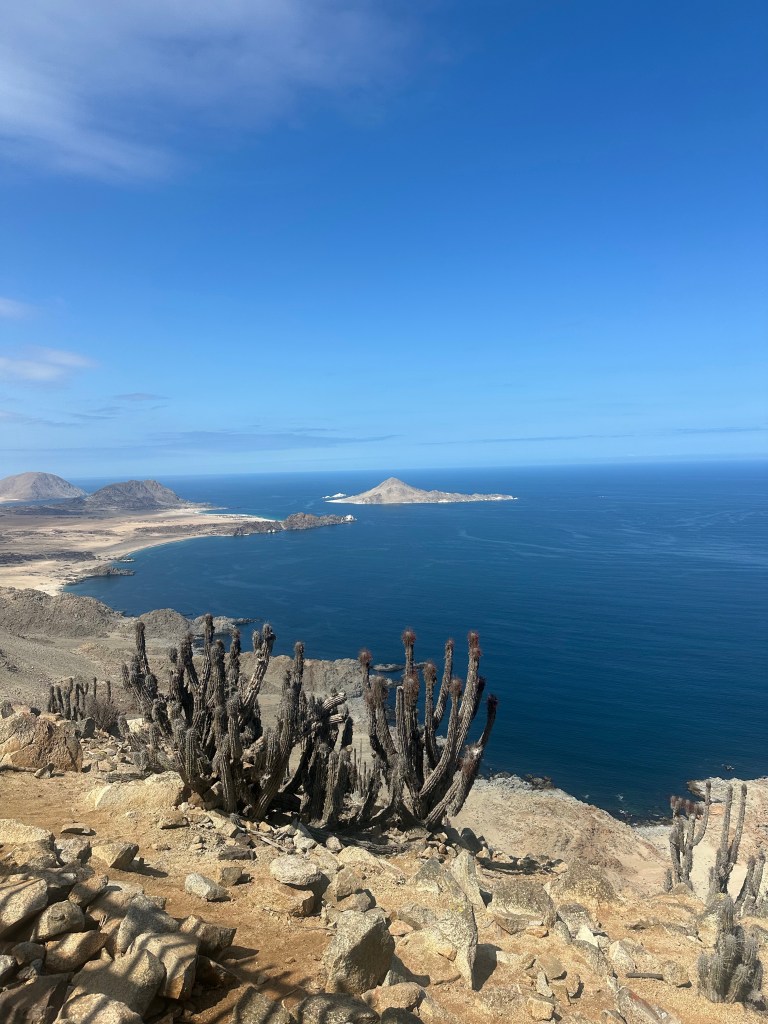
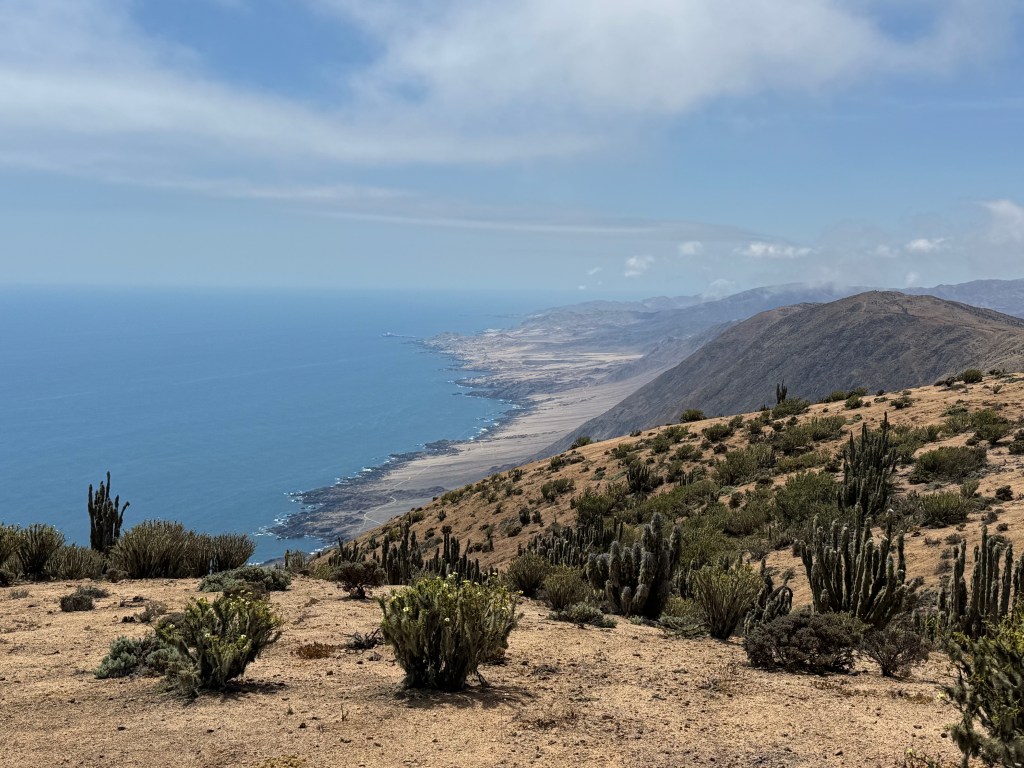
What makes Pan de Azúcar truly special is the coastal fog, or camanchaca, that rolls in from the ocean. This life-giving mist supports an extraordinary variety of plant life in what would otherwise be barren desert. On our second day, we did a longer hike that wound its way though barren cactus landscapes to arrive on top of a 1,000 ft cliff overlooking the ocean. At this overlook there were numerous huge nets that captured and collected the ocean fog. There was even a small sink where you could taste the clear and clean water. This was our favorite hike in the park because despite receiving almost no rainfall, the cacti and other desert plants were surviving and blooming due to the moisture from the coastal fog alone.
It was great to be back getting our feet underneath of us and accumulating miles. We wanted to keep our hiking going in order to get back in shape for the high elevation backpacking we knew was coming once we passed into Peru. Our next stop in Chile is the famed San Pedro de Atacama where it feels like you leave Earth for a walk on the moon.

 Nikki and Colter's South American Travel Blog
What glorious and fascinating reporting from two wonderful people!
Ross
LikeLike